

Best Tea Brands for Daily Rituals: 7 Blends to Try in 2026
Table of Contents
- What Makes a Tea Brand Right for Daily Rituals
- Quick Comparison: 7 Blends for Daily Rituals
- 1. English Breakfast: The Reliable Morning Anchor
- 2. Earl Grey: A Citrus-Forward Afternoon Pick-Me-Up
- 3. Jasmine: Floral Notes for a Mindful Pause
- 4. Moroccan Mint: Refreshing Hot or Iced
- 5. Matcha: The Focused Ritual for Slow Mornings
- 6. Masala Chai: Bold Spice for Evening Wind-Down
- The Best Way to Brew Loose Leaf Tea at Home
- 7. Apple Cider Rooibos: Caffeine-Free Evening Comfort
- How to Start a Morning Tea Ritual
- Frequently Asked Questions
Last Updated: September 11, 2026
What Makes a Tea Brand Right for Daily Rituals
The best tea brands for daily rituals make a consistent daily cup easy to repeat: fresh, well-sourced leaves, clear brewing guidance, and a flavor you look forward to. This guide from Hall's Coffee & Tea breaks down seven blends worth building a routine around.
A daily tea ritual is preparing and drinking tea at a set time each day, treating the process as a pause rather than a task to rush. Choosing a brand comes down to three things: leaf quality, freshness at delivery, and whether the flavor matches the time of day you'll drink it.
Quick Comparison: 7 Blends for Daily Rituals
Here's the short version before the detail. Prices reflect one-time purchases from Hall's Coffee & Tea.
| Blend | Price | Best Time | Flavor Profile | Caffeine |
|---|---|---|---|---|
| English Breakfast | $18.00 | Morning | Rustic, sweet, full-bodied | Higher |
| Earl Grey | $16.00 | Afternoon | Citrus, floral, malt | Higher |
| Jasmine | $18.00 | Midday pause | Sweet, smooth, floral | Moderate |
| Moroccan Mint | $16.00 | Afternoon, hot or iced | Vibrant, refreshing | Moderate |
| Matcha | $20.00 | Slow mornings | Refined, lingering, grassy | Moderate |
| Masala Chai | $18.00 | Evening wind-down | Bold, spicy, aromatic | Higher |
| Apple Cider Rooibos | $16.00 | Evening | Spicy, sweet, caffeine-free | None |
1. English Breakfast: The Reliable Morning Anchor
English Breakfast is the blend to reach for when you want a cup that works the same way every morning. Hall's version blends African and Indian teas into a rustic, sweet cup strong enough to stand up to milk and sugar. It's loose leaf, not bagged: whole leaves steep evenly and hold their aroma far longer than the dust in standard tea bags.

The limitation: this is a higher-caffeine cup, so if you're sensitive, keep it to the morning. Give it a full boil and pull it at four minutes to avoid bitterness.
USDA tea and caffeine guidance
2. Earl Grey: A Citrus-Forward Afternoon Pick-Me-Up
Earl Grey earns its place in a daily ritual because bergamot gives it a lift plain black tea lacks, without the heaviness of a second coffee. Hall's blends Ceylon OP with blue cornflowers and bergamot essential oil for orange, floral, and malt notes.

Brew it at 195°F for five to ten minutes, and try it without milk first. One drawback: bergamot is polarizing, so if you've disliked Earl Grey before, this won't convert you.
3. Jasmine: Floral Notes for a Mindful Pause
Jasmine is the blend for midday, when you want a pause rather than a jolt. Hand-picked green tea is paired with freshly plucked jasmine blossoms, producing a medium-bodied, sweet, silky cup. It's good for multiple steepings, which stretches the value of a single scoop.

4. Moroccan Mint: Refreshing Hot or Iced
Moroccan Mint is the most versatile blend here because it works in every season. Green tea meets fresh mint for a smooth, vibrant cup that's refreshing hot and excellent iced. If you've never made loose leaf iced tea, start here: steep it strong, then pour over ice.
It's also the most forgiving blend to learn on: mint covers small brewing errors that would ruin a delicate green.
5. Matcha: The Focused Ritual for Slow Mornings
Matcha is less a drink than a deliberate practice, which is why it suits a slow morning. Hall's matcha is refined and lingering, crafted for traditional preparation. Whisking takes a couple of minutes you can't rush, and that friction is the point: it forces a pause before the day starts. The trade-off is equipment and technique, so if you want zero fuss, skip this one.
6. Masala Chai: Bold Spice for Evening Wind-Down
Masala Chai brings the bold, spicy character of Indian chai: full-bodied, aromatic, and intense. It's excellent served traditionally with milk and sugar, and pairing the brewing with a few minutes of quiet attention turns it into a genuine wind-down.
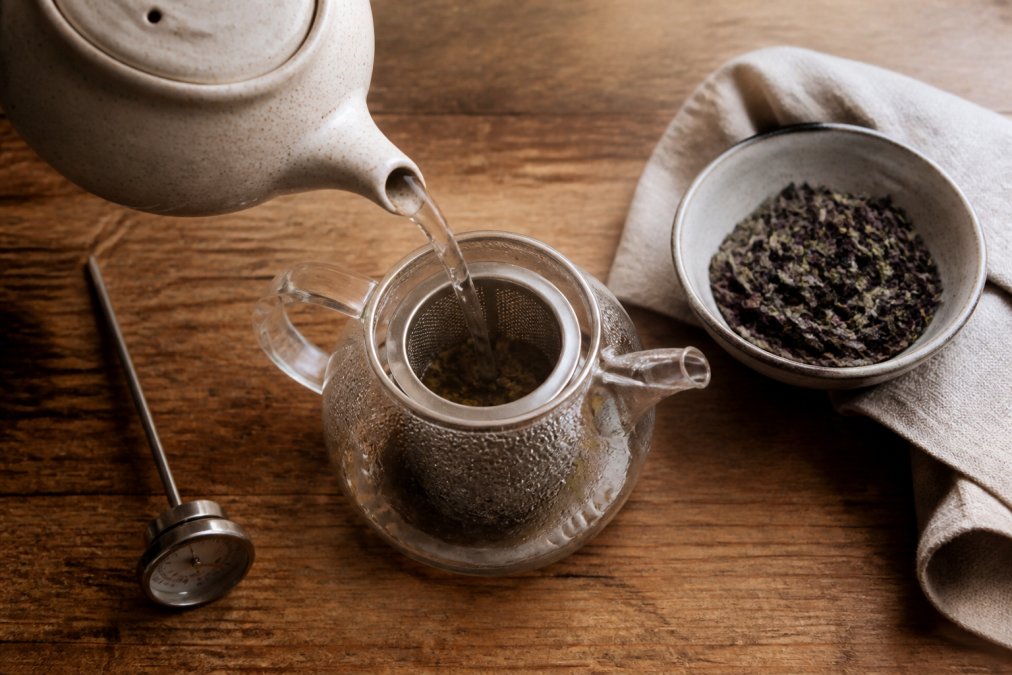
The Best Way to Brew Loose Leaf Tea at Home
The best way to brew loose leaf tea at home is to control four variables in order of impact: water quality, water temperature, leaf-to-water ratio, and steep time.
Start with water, not leaves
If your tap water smells or tastes like chlorine, that flavor concentrates in the cup. Two fixes work: a carbon-filter pitcher, or drawing water the night before and letting it sit uncovered so chlorine off-gasses. Hard water, high in dissolved calcium and magnesium, flattens the aroma of delicate green and white teas and can leave a chalky film; if your kettle builds scale quickly, that is your signal. Experienced brewers often use filtered or low-mineral bottled water for green and white teas, and tap water for robust blacks and herbals.
Never re-boil water repeatedly: each boil drives off dissolved oxygen, and flat water produces a dull cup. Boil what you need, then stop.
Temperature: the numbers that matter
A rolling boil is 212°F at sea level, and it is wrong for most teas. Use this as your working range:
- Delicate green teas (gyokuro, fine sencha): 140-160°F
- Standard green teas (Jasmine, Moroccan Mint): 160-175°F
- White teas: 175-185°F
- Oolong: 185-205°F, depending on oxidation level
- Black teas (English Breakfast, Earl Grey, Chai): 200-212°F
- Herbal blends and rooibos: 212°F
- Matcha: whisked with water around 175°F, never steeped
Without a thermometer, use the "two-kettle" trick: boil, then pour the water into a second room-temperature vessel. That transfer drops the temperature roughly 10-15°F and gets you into green-tea range without guessing.
Ratio and time
A reliable starting ratio is one teaspoon of loose leaf per 8 ounces of water for most teas, and roughly double that for bulky, low-density large-leaf herbals like rooibos. Weighing is more consistent than scooping if you brew the same tea daily.
Steep times by category:
- Black: 4-5 minutes
- Green: 2-3 minutes
- White: 3-4 minutes
- Oolong: 3-5 minutes, and these leaves reward two to three re-steeps
- Herbal/rooibos: 5-7 minutes
Whole-leaf teas can generally be re-steeped; add roughly 30 seconds to each subsequent steep. This is where loose leaf closes the cost gap with bags: one scoop of a re-steepable oolong or jasmine can yield two or three cups.
Vessel and technique
A glass or ceramic infuser lets you watch the leaves unfurl and doesn't hold onto flavors from the last tea. Metal infusers work but can impart a faint metallic note to delicate greens. Give leaves room to expand, cramming them into a narrow ball infuser prevents even steeping. For matcha, a bamboo whisk (chasen) aerates the powder into a smooth suspension; a milk frother works, but a spoon leaves clumps.
7. Apple Cider Rooibos: Caffeine-Free Evening Comfort
Apple Cider Rooibos closes the day without caffeine, the natural counterpart to your morning cup. Rooibos is a South African red bush tea, naturally caffeine-free, elevated here with cinnamon, orange peel, and warm spices. It's spicy and sweet, and the fall flavors work year-round. For anyone building a full daily ritual, this is the evening bookend: morning gets the English Breakfast, evening gets this.
FDA guidance on caffeine and labeling
How to Start a Morning Tea Ritual
Starting a morning tea ritual works best when you anchor it to something you already do. If you already make breakfast or check your email, brew your tea at the same moment every day for two weeks. What most guides skip is the part that makes the ritual change your day: pairing the brew with a mindfulness practice, and doing it without spending premium prices.
Anchor the habit, then layer the practice
Habit research shows new behaviors stick when attached to an existing cue rather than willpower. The tea ritual suits this because brewing already has a fixed sequence, boil, measure, steep, pour, that acts as a built-in timer. Use that sequence as the frame for a short mindfulness practice:
- Breathwork during the steep. The two to four minutes of steeping is dead time you would otherwise spend on your phone. Instead, use it for slow breathing: inhale for a count of four, hold for four, exhale for six. The longer exhale nudges the nervous system toward calm, and you are filling time you already spend waiting.
- A single journal line. Keep a small notebook next to your brewing station and write one sentence before the first sip, what you noticed, what you are carrying into the day. One line, not a page.
- Sensory grounding. Before drinking, notice three things about the cup: the color, the aroma, the temperature against your hands. This takes under thirty seconds.
Build it on a budget
A daily ritual only works if you can afford to repeat it every day. Premium single-origin teas are wonderful, but a daily cup doesn't require them. Three levers keep costs down:
- Buy in larger quantities. Loose leaf sold by the ounce is almost always cheaper per cup than individually wrapped bags, and the price per ounce drops as package size increases. A 4-ounce bag of a solid English Breakfast will outlast a box of premium bags and cost less per serving.
- Choose re-steepable teas. Whole-leaf oolongs and jasmines can be steeped two to three times. If a scoop yields three cups instead of one, your effective cost per cup falls by roughly two-thirds.
- Rotate one premium blend, not seven. Pick one blend you genuinely love for the daily anchor, and treat the rest as occasional.
A practical target: a well-chosen loose leaf daily cup can land from a few cents to well under a dollar per serving once you account for re-steeping and bulk pricing.
Make it stick
- Pick one blend and drink it daily for the first two weeks. Variety comes later.
- Keep your brewing vessel where you can see it.
- Set a timer for the first week so steeping becomes automatic.
- Treat the three minutes of steeping as protected time, not waiting time.
- Pair the steep with one practice, breath, a journal line, or sensory grounding, and keep it to one until it is automatic.
The benefits of artisanal tea show up in the ritual itself: a fixed point of pause, comfort, and connection in a day otherwise scheduled end to end. That's why loose leaf is worth the extra step over a bag.
NIH research on tea and health
Frequently Asked Questions
What makes a tea brand suitable for a daily ritual?
A brand suited for daily rituals offers consistent quality, clear sourcing, and a range of blends that fit different times of day. Look for loose leaf options with distinct flavor profiles, reliable batch testing, and transparent origin information. Hall's Coffee & Tea provides single-origin and blended teas like English Breakfast and Jasmine that support a steady routine without overwhelming complexity.
How do I choose between loose leaf and tea bags for daily brewing?
Loose leaf tea gives you control over steeping time and water temperature, which affects tannins and overall flavor. Tea bags are convenient but often contain smaller particles that brew faster and less evenly. For a daily ritual, loose leaf in an infuser or brewing vessel offers a fuller sensory experience and lets you adjust strength to your taste.
Are organic tea brands better for daily consumption?
Organic certification indicates the tea was grown without synthetic pesticides. While organic certification is a factor, it doesn't automatically mean better flavor or higher antioxidants. Focus on brands that share quality control details and batch testing results. Sustainably sourced teas from Hall's Coffee & Tea prioritize careful sourcing alongside flavor.
What are the benefits of artisanal tea for a wellness routine?
Artisanal tea supports a wellness routine through mindful consumption: the act of brewing slows you down and creates a sensory experience. Loose leaf teas can retain more essential oils and flavor compounds. Blends like Matcha and Moroccan Mint offer caffeine-free or low-caffeine options, making them suitable for an afternoon pick-me-up or evening wind-down.
How does the quality of tea leaves affect the ritual experience?
Different qualities of leaves, such as single-origin or full-leaf varieties, can expand during steeping and release flavor gradually. This can affect aroma, body, and how many times you can resteep. Some lower quality leaves may turn bitter quickly. Choosing teas with clear oxidation levels and terroir information can help you build a more enjoyable and consistent daily ritual.
Building a daily tea ritual shouldn't require a shelf of equipment or a chemistry degree, but it does reward choosing fresh, well-sourced leaves and brewing them with a little care. Hall's Coffee & Tea sources premium loose leaf blends with the brewing details printed on every product, so your morning English Breakfast and your evening Rooibos taste the same on day one and day thirty. Shop the collection and find the blend that anchors your day.
