

How to Store Loose Leaf Tea for Freshness
Table of Contents
- What You'll Need Before You Start Storing Tea
- How to Store Loose Leaf Tea for Freshness: Step by Step
- The Best Containers for Loose Leaf Tea
- How Long Does Loose Leaf Tea Last?
- Signs of Stale Tea You Should Never Ignore
- Common Tea Storage Mistakes to Avoid
- Frequently Asked Questions
Last Updated: September 30, 2026
What You'll Need Before You Start Storing Tea
Learning how to store loose leaf tea for freshness starts with four simple items. You don't need special equipment or a big budget. You need the right basics.
Here's your short list:
- An airtight container made of tin, ceramic, or opaque glass
- A cool, dark cabinet away from your stove and fridge
- Labels and a pen for dating each batch
- A small scoop so you're not digging in with wet hands
That's it. At Hall's Coffee & Tea, we ship loose leaf teas like Earl Grey and Jasmine in sealed packaging for a reason: air, light, heat, and moisture are the four enemies of fresh tea. Once you open that bag, the clock starts ticking.


The good news? A few smart habits keep your tea tasting the way it should for months.
How to Store Loose Leaf Tea for Freshness: Step by Step
Storing loose leaf tea well comes down to three habits: block the air, control the temperature, and track the date. Follow these steps in order and you'll notice the difference in your very first cup.
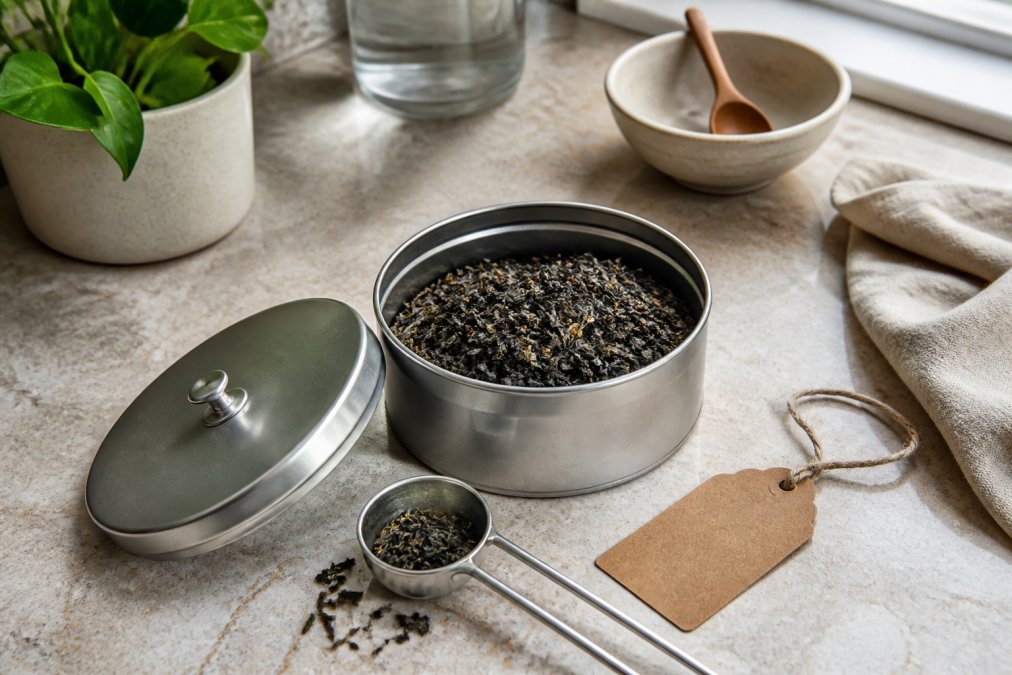
Step 1: Pick the Right Container
Choose an airtight container that blocks light. A metal tin works best for most people. Ceramic and opaque glass are close seconds.
Skip clear glass jars on open shelves. They look nice, but light breaks down the oils that give tea its flavor. A common mistake is buying a beautiful glass jar and leaving it on the counter. Within weeks, the tea tastes flat.
Whatever you pick, it must seal tight. If you can smell the tea through the closed lid, air is getting in.
Step 2: Choose a Cool, Dark Spot
Store your container in a cool, dark cabinet, ideally between 60 and 70 degrees Fahrenheit. Keep it away from the stove, the oven, and sunny windows.
The refrigerator seems like a smart choice. It isn't. Tea picks up odors from nearby food, and every time you open the container, condensation forms. That moisture ruins dry leaves fast.
Pick one shelf in a pantry or cabinet and keep it consistent.
Step 3: Label and Date Every Batch
Write the tea name and the date you opened it on every container. This takes ten seconds and saves you from guessing later.
Why does it matter? Because different teas fade at different rates. A delicate green tea loses its character faster than a sturdy black blend. Dating each batch tells you exactly when to finish it.
- Use a piece of masking tape and a marker, or buy small sticky labels
- Note the open date, not the purchase date
- Move older batches to the front so you use them first
That last tip alone prevents most stale-tea surprises.
The Best Containers for Loose Leaf Tea
The best containers for loose leaf tea are airtight, opaque, and sized to the amount you actually keep on hand. Material matters less than the seal.
Here's how the common options compare:
| Container Type | Blocks Light? | Seal Quality | Best For |
|---|---|---|---|
| Double-seal metal tin | Yes | Excellent | Everyday storage |
| Ceramic canister | Yes | Good | Countertop display |
| Opaque glass jar | Yes | Varies | Small batches |
| Clear glass jar | No | Varies | Short-term only |
| Original foil bag | Yes | Good until opened | Backup storage |
A few notes from experience. Metal tins hold their seal the longest. Ceramic canisters look lovely but check the lid, because some just rest on top without sealing.
One insider tip: buy containers sized to your tea, not your shelf. A large tin that's mostly empty holds too much air, and air is what you're fighting.
How Long Does Loose Leaf Tea Last?
Loose leaf tea lasts six months to two years past its harvest, depending on the type. Black and oolong teas hold up longest. Green and white teas fade fastest.
Here's a rough guide to plan around:
- Black tea: up to two years
- Oolong: up to eighteen months
- Green tea: six to twelve months
- White tea: one to two years
- Herbal blends: one to two years
These are general windows, not hard rules. Storage quality changes everything. Tea kept in an airtight tin in a dark cabinet will outlast the same tea left in an open bag on a sunny shelf.
A practical approach: buy in amounts you'll finish within a few months. A smaller, fresher supply beats a bulk stash that goes stale. Hall's Coffee & Tea offers blends like English Breakfast and Masala Chai in sizes that suit regular drinking, so you're not stuck storing tea for years.

Signs of Stale Tea You Should Never Ignore
Stale tea announces itself in four ways: faded aroma, dull color, flat taste, and a dry, papery smell. If your tea hits two or more of these, it's past its prime.
Watch for these signs:
- No scent when you open the tin. Fresh tea smells bright and distinct. Stale tea smells like almost nothing.
- Pale liquor after brewing. The color should match what you saw when the tea was new.
- A flat, dusty taste. Good tea has layers. Stale tea tastes like cardboard.
- Dry, brittle leaves. Fresh leaves feel slightly springy. Old leaves crumble.
One more thing most guides skip: stale tea isn't unsafe. It just isn't enjoyable. You won't get sick, but you'll wonder why you bothered brewing it.
If your tea has lost its spark, don't toss it right away. It still works in a pitcher of cold brew or as a mild iced tea, where subtle flavors matter less.
Common Tea Storage Mistakes to Avoid
Most storage mistakes come from good intentions. People want their tea to stay fresh, so they try harder than they need to.
These are the ones I see most:
- Using the fridge. Cold air plus condensation equals soggy, odor-absorbing leaves.
- Storing near the stove. Heat speeds up the breakdown of flavor oils.
- Leaving tea in the original bag, rolled open. Air moves in freely.
- Scooping with wet hands or a damp spoon. Moisture is the fastest way to ruin a batch.
- Buying huge amounts to save money. You save per ounce but lose on flavor.
- Keeping tea past its window because it "still looks fine." Looks aren't the test. Smell and taste are.
A simple fix for most of these: keep one small tin on your counter for daily use and store the rest sealed in a dark cabinet. Refill the small tin as needed. That way your main supply stays closed and protected.
Storing loose leaf tea well is a small ritual with a big payoff. The catch is that even perfect storage can't rescue tea that arrived old or faded, which is why the source matters as much as the tin. Hall's Coffee & Tea ships freshly sourced loose leaf teas with free US shipping and blends crafted for people who care about the cup in front of them. Start with a tin of Jasmine or Earl Grey, store it right, and taste what fresh tea actually means.
Frequently Asked Questions
What is the best container for storing loose leaf tea?
An airtight, opaque container is your best bet. Metal tins with double lids and ceramic jars with rubber gaskets all block light and air, the two things that age tea fastest. Clear glass jars look nice on a shelf but let light through, so keep them in a closed cabinet if you use them.
How long does loose leaf tea last once opened?
Most loose leaf teas hold their best flavor for 6 to 12 months after opening. Black teas like English Breakfast tend to last longest, while green and white teas fade faster, often within 6 to 8 months. Flavored blends such as Earl Grey sit somewhere in the middle. The clock starts when the bag is opened, not when it was picked, so date your container on day one.
Should I store loose leaf tea in the refrigerator or freezer?
Skip both for everyday storage. Tea leaves absorb moisture and nearby odors quickly, and the fridge delivers both every time you open the door. Condensation forming inside the container is the bigger risk. For daily drinking, a cool, dark cabinet works better.
Can I store different types of tea in the same container?
No, keep each type separate. Tea leaves pick up aromas from whatever sits beside them, so a smoky black tea will quietly reshape the taste of a delicate jasmine green. Even within the same category, strong flavors like Masala Chai and light ones like Jasmine should live in their own tins. If you want to save shelf space, stack small containers rather than mixing leaves together.
