

How to Verify Coffee Bean Quality Certifications
Table of Contents
- Why Coffee Bean Certifications Matter for Your Cup
- How to Read Coffee Labels for Quality
- Coffee Certification Lookup Tools You Can Use Today
- The Difference Between Fair Trade and Direct Trade
- Spotting Counterfeit Labels and Marketing Claims
- Cost vs. Quality: Are Certifications Worth the Premium?
- Building Your Verification Workflow: A Step-by-Step Checklist
- Frequently Asked Questions
Last Updated: September 16, 2026
Why Coffee Bean Certifications Matter for Your Cup
Coffee bean certifications are third-party verifications that confirm a producer met specific standards for farming, labor, or processing. They're the closest thing to a guarantee that the $22 bag in your cart is what the label claims. This guide from Hall's Coffee & Tea walks through how to verify coffee bean quality certifications yourself.
Here's the uncomfortable part: a certification logo is a claim, not proof.
How to Read Coffee Labels for Quality
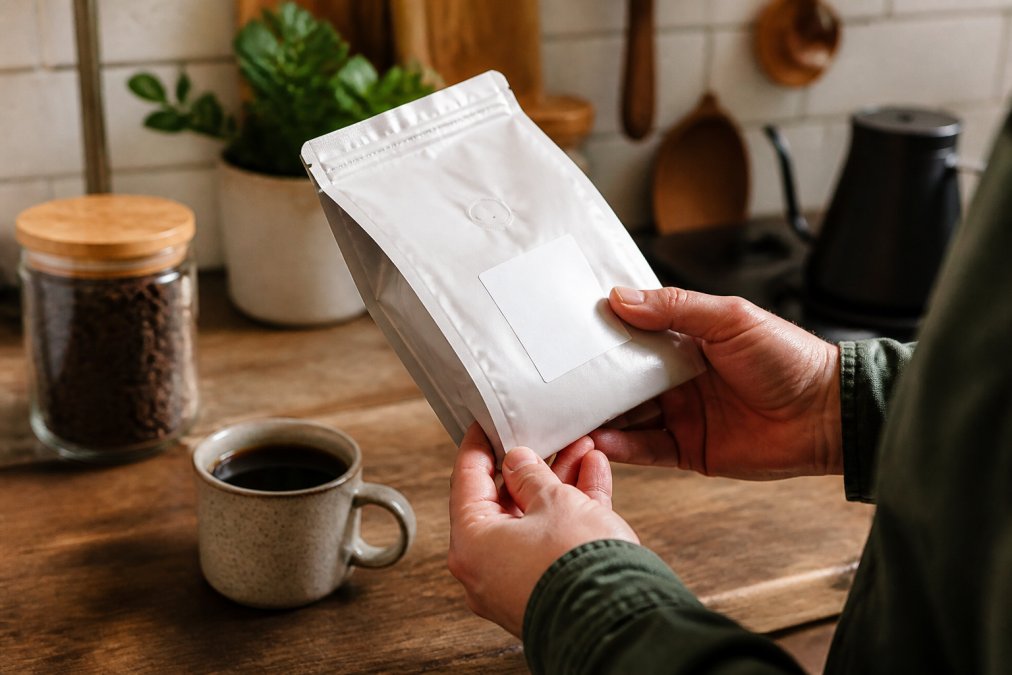
Reading a coffee label for quality means finding four things fast: the roast date, origin, grade, and processing method. Everything else is marketing.
Roast Date vs. Best-By Date
A roast date tells you when the beans were roasted; a best-by date tells you when the seller wants you to stop buying. Only one is useful.
Origin, Grade, and Processing Clues
Specific origins beat vague ones. "Single origin" with a named region, farm, or cooperative tells you the roaster knows its supply chain; "South American blend" tells you nothing verifiable.
Coffee Certification Lookup Tools You Can Use Today
Coffee certification lookup tools are searchable databases run by certifying bodies that let you confirm whether a specific farm, cooperative, or roaster holds a valid certificate. They're free, public, and almost nobody uses them.
The Four Registries That Cover Most Bags
Almost every certification claim on a retail bag resolves to one of four lookup systems:
- USDA Organic Integrity Database, the authoritative registry for organic claims in the United States. Search by operation name, certifier, or certificate number.
- Fairtrade America / Fairtrade International, public producer and licensed brand registries for the Fair Trade mark.
- Rainforest Alliance, its own traceability and certificate lookup, separate from Fair Trade and organic.
- Bird Friendly (Smithsonian Migratory Bird Center), a smaller registry, but the only one that verifies shade-grown habitat standards.
Step-by-Step: Running a Lookup
Here's the workflow that turns a logo into a confirmed record.
What a Valid Record Looks Like, and What It Doesn't
A clean lookup result isn't the same as a clean claim. Watch for these patterns:
- Active status, correct scope, current dates. The only combination that fully supports the logo.
- Name match, expired status. Common when a roaster let a certificate lapse but kept printing the seal. Stale, not necessarily fraudulent, but not verified.
- Roaster listed, farm not. The roaster may be licensed to sell certified coffee without your specific lot being certified. Ask for lot-level documentation.
- No result at all. The ID is wrong, the roaster isn't licensed, or the claim is fabricated. Any of the three means you can't verify it.
Why Registries Sometimes Lag
Registries update on different schedules: a lapsed listing can trail reality by weeks, and a new certificate can take time to appear. If a lookup fails, contact the roaster and ask for the certificate directly, a legitimate operation can produce it quickly. One that can't or won't is telling you something.
Beyond the Registry: QR Codes and Lot-Level Traceability
For supply chain claims that go past certification, some producers now publish QR code or blockchain traceability records that let you scan a bag and see the farm, harvest date, and processing method. Coverage is uneven, but where it exists it's the strongest verification available, because the record is tied to the specific lot rather than the brand.
The Difference Between Fair Trade and Direct Trade
The difference between Fair Trade and Direct Trade comes down to who does the verifying. Fair Trade uses an independent third-party certifier with published standards. Direct Trade is a relationship between a roaster and a producer, verified by the roaster itself.
Spotting Counterfeit Labels and Marketing Claims
Counterfeit certification labels exist, and they're more common than most buyers assume. The tell is usually a mismatch between logo and paperwork, but the harder cases aren't outright fakes. They're greenwashed marks designed to look like certifications without being any.
1. Outright Fakes
A fabricated seal is the easiest to catch once you know what to look for:
- A logo with no certificate ID. Legitimate marks pair with a traceable number. A seal with no number is a graphic, not a credential.
- A certifier name you can't find. If the organization has no website, no published standards, and no public registry, it isn't a certifier, it's a brand.
- A certification that doesn't match the origin. Some certifications are region- or country-specific; a farm in one country can't hold a certificate issued only for another.
- A roaster claiming certification they don't hold. Roasters can be licensed to sell certified coffee, or they can just print the logo. Only the database tells you which.
2. Lookalike and Greenwashed Seals
The harder problem is a seal that mimics a real certification without claiming to be one, designed to pass a two-second glance.
Common patterns:
- Similar color, similar shape, different words. A green circular badge with a leaf and "Sustainably Sourced" borrows the visual grammar of a real mark without adopting its standard.
- Self-invented standards. A roaster's own "Gold Standard" or "Farm Direct Certified" program may be genuine internal policy, but it's verified by the roaster, not an independent body.
- Borrowed certifier names. A bag may reference a real organization ("Rainforest Alliance ingredients") in a way that implies full certification when only part of the blend qualifies.
- Vague ethical language. "Ethically sourced," "sustainably grown," and "responsibly farmed" are not certifications. No auditor checks them, no database lists them, no standard defines them. Treat them as decoration.
3. Expired or Out-of-Scope Claims
A roaster can hold a real certificate and still misrepresent it: the certificate may have lapsed, or cover a different product line than the bag in your hand. This is why the lookup step matters, a name match alone isn't verification. You need active status and a scope covering the product you're buying.
A Quick Field Test
When you're holding a bag and can't run a full lookup, run this filter:
- Name the certifier. If you can't say which organization issued the mark, it's not a certification you can verify.
- Find the ID. No number, no traceable record.
- Check the wording. "Certified" is a claim. "Inspired by" or "in the spirit of" is marketing.
- Look for the standard. Real certifiers publish their criteria. If you can't find the standard, you can't evaluate the claim.
The Strongest Counter-Counterfeit Signal
For supply chain claims that go beyond certification, some producers now publish QR code or blockchain traceability records that let you scan a bag and see the farm, harvest date, and processing method. Coverage is uneven, but where it exists it's the strongest verification available, because the record is tied to the specific lot rather than the brand.
Cost vs. Quality: Are Certifications Worth the Premium?
Certified coffee usually costs more, and the premium doesn't automatically buy a better cup. It buys a verifiable claim about how the coffee was produced.
- If you care about ethical sourcing and environmental standards, certification is the only claim you can independently check.
- If you care purely about flavor, spend on roast date, origin specificity, and processing method instead.
- If you care about both, buy certified coffee from a roaster who also publishes roast dates and cupping scores. The overlap is where the best bags live.
Building Your Verification Workflow: A Step-by-Step Checklist
Total time: about 5 minutes per bag Difficulty: beginner
What you'll need:
- The bag or its product page
- The certifying body's public registry
- A phone camera for capturing certificate IDs
At Hall's Coffee & Tea, we source with that same standard in mind. Our Italian Roast is a slow-roasted blend of specialty grade Arabica and Robusta, and our French Roast is a dark roast built from specialty grade Central American coffee. If you want something with a little more going on, the Coffee with Mushrooms Dark Roast infuses specialty grade coffee with Lion's Mane, Cordyceps, and Reishi. Every bag ships free, and every one carries the details you need to run the checklist above.


Frequently Asked Questions
How can I verify if a coffee certification is legitimate?
Start by checking the certifier's official online database. For Fair Trade, visit Fairtrade America's lookup tool; for organic, use the USDA Organic Integrity Database. Enter the roaster's name or certificate number. If the roaster claims certification but isn't listed, that's a red flag. Also look for the certification logo on the packaging with a license number. Legitimate coffee bean certifications always trace back to a verifiable source.
What is the difference between fair trade and direct trade?
Fair trade is a third-party certification with audited standards for pricing, labor, and environmental practices. Direct trade means a roaster buys directly from farmers without a certifying body, often paying above fair trade rates but without formal verification. Direct trade can offer fresher, higher-quality beans, but you rely on the roaster's transparency. Fair trade gives you a database to check; direct trade requires trusting the roaster's origin story.
Does organic certification guarantee better coffee quality?
No. Organic certification covers growing practices, not flavor or grade. A coffee can be organic but still have defects or stale roast dates. Quality depends on bean density, moisture content, processing method, and roast date. Use organic as one data point for ethical sourcing, but check the roast date and specialty grade for actual cup quality. Combine certifications with freshness indicators for the best results.
What are the most reliable coffee certifications for quality and ethics?
For ethics, Fair Trade USA, USDA Organic, and Bird Friendly are well-regulated and searchable. For quality, look for specialty grade (80+ points from the Coffee Quality Institute) and Rainforest Alliance for environmental standards. No single certification covers everything, so stack them: a bag with Fair Trade, organic, and a recent roast date from a single origin is a strong signal. Always verify each claim through its official database.
