

Is Cold Brew Coffee Better for Sensitive Stomachs?
Table of Contents
- What Makes Cold Brew Coffee Easier on Your Stomach
- Low Acid Coffee Beans: What to Look For
- Cold Brew vs Iced Coffee Acidity: Not the Same Drink
- Coffee and Acid Reflux Symptoms: What the Research Shows
- Caffeine, Additives, and Water: Factors Beyond Acidity
- How to Brew Low-Acid Cold Brew at Home
- Which Cold Brew Coffee Should You Try?
- Frequently Asked Questions
Last Updated: September 28, 2026
What Makes Cold Brew Coffee Easier on Your Stomach
If your morning cup leaves your stomach irritated, cold brew coffee is often a better choice than hot-brewed coffee because it contains fewer of the acids that trigger discomfort.

How Cold Water Changes the Extraction
Acid extraction is temperature-dependent. Heat speeds the release of compounds from the grounds, including the chlorogenic acid and other organic acids that give coffee its bright, sharp taste. Cold water slows that dramatically.
Low Acid Coffee Beans: What to Look For
Low acid coffee beans are not a single variety, and the shorthand that "dark roast equals less acid" is only half true. Acidity comes from several sources, and roast level affects them in opposite directions depending on which acid you measure.
The Two Kinds of Coffee Acidity
When people call coffee "acidic," they usually mean one of two things.
- Titratable acidity is the total amount of acid compounds in the cup, measured by how much base it takes to neutralize them. This is the number that matters for stomach irritation.
- Perceived acidity is the bright, sharp, fruity sensation on your palate, loosely correlated with titratable acidity but influenced by roast, origin, and brewing.
How Roast Level Actually Changes the Acid Profile
Green coffee contains a family of acids, most discussed being chlorogenic acids. Roasting breaks them down into quinic acid and caffeic acid:
- Light roasts retain more intact chlorogenic acid, associated with the bright, fruity character people call "acidity."
- Dark roasts have less chlorogenic acid but more quinic acid, a breakdown product that can taste bitter and, in some people, is itself a stomach irritant.
Origin and Altitude
Where a bean grows shapes its acid chemistry before roasting. High-altitude coffees ripen slowly, concentrating sugars and organic acids for the bright, complex cups specialty roasters prize. Lower-altitude coffees ripen faster and land softer, with less perceived acidity.
Processing Method
Processing method matters too:
- Washed (wet) processing produces a cleaner, more transparent cup that often reads as brighter and more acidic.
- Natural (dry) processing leaves fruit mucilage on the bean during drying, amplifying fruity, fermented notes. Not necessarily more acidic in total, but more intense.
- Swiss Water Process decaf removes caffeine using water and carbon filters rather than chemical solvents, avoiding the harshness solvent-based decaf can carry.
A Practical Shortlist
To stack the odds in your favor:
- Start with a medium or medium-dark roast rather than the darkest option on the shelf.
- Favor lower-altitude origins over high-grown, bright coffees.
- Choose Swiss Water Process decaf if caffeine is also a trigger.
- Skip flavored beans and heavily oiled dark roasts, which add compounds your stomach has to deal with.
Don't chase a zero-acid bean, it doesn't exist. Reduce the acid load and irritating breakdown products together, then adjust based on how you feel.
Cold Brew vs Iced Coffee Acidity: Not the Same Drink
Cold brew vs iced coffee acidity is the comparison most people get wrong, and the confusion costs sensitive drinkers comfort.

| Factor | Cold Brew | Iced Coffee |
|---|---|---|
| Brewing method | Immersion, cold water | Hot brew, then chilled |
| Steep time | 12-24 hours | 4-5 minutes |
| Acid level | Lower | Higher |
| Flavor profile | Smooth, low bitterness | Bright, sharper |
| Best for | Sensitive stomachs | Traditional coffee taste |
Coffee and Acid Reflux Symptoms: What the Research Shows
Coffee and acid reflux symptoms are linked, and the mechanism is well described. Coffee relaxes the lower esophageal sphincter (LES), the ring of muscle that keeps stomach contents down. When it loosens, acid travels upward and you feel the burn. Caffeine and coffee's natural acids both contribute, which is why some people who react badly to hot coffee handle cold brew with far less trouble.
GERD and Acid Reflux
Gastroesophageal reflux disease is the most common reason people blame coffee. The trigger is mechanical as much as chemical: a relaxed LES plus stomach pressure pushes acid into the esophagus. Cold brew helps on two fronts, lower titratable acidity means less acid to reflux, and it lacks the hot-brewed oils and bitter compounds that irritate an inflamed esophageal lining.
Gastritis and Stomach Lining Irritation
Gastritis is inflammation of the stomach lining, and it behaves differently from reflux: the concern is direct contact irritation rather than upward splash. Cold brew's lower acid load and fewer harsh oils make it gentler on an inflamed lining than a hot, dark, heavily extracted cup. Temperature matters too, a cold drink stimulates gastric acid secretion less than a hot one in many people.
IBS and Functional Gut Sensitivity
Irritable bowel syndrome is a motility and gut-brain axis condition, not an acid condition. Coffee stimulates colonic contractions, which is why so many people get the morning urge after a cup (pubmed.ncbi.nlm.nih.gov). Cold brew does the same, because the caffeine and chlorogenic acid compounds driving that response survive cold extraction.
The Honest Bottom Line
Cold brew is genuinely lower-acid, and for reflux and gastritis that difference is meaningful. For IBS, the benefit is smaller and depends more on caffeine dose and what you add. If you have a diagnosed condition, cold brew may reduce symptoms but is not a treatment. Talk to your doctor rather than assuming the cold version is automatically safe.
Caffeine, Additives, and Water: Factors Beyond Acidity
Acidity gets the attention, but three other factors upset a sensitive stomach just as much.
How to Brew Low-Acid Cold Brew at Home
Brewing a stomach-friendly cold brew at home takes about five minutes of hands-on work and a night in the fridge.
What you'll need:
- Coarse-ground coffee (a dark or medium roast works best)
- A large jar or pitcher
- A fine mesh strainer or cheesecloth
- Filtered water
The steps:
- Measure your ratio. Use about 1 cup of coarse grounds for every 4 cups of filtered water. This makes a concentrate you'll dilute later.
- Combine and stir. Add grounds to the water and stir gently to make sure everything is saturated.
- Steep cold. Cover and refrigerate for 12 to 18 hours. Longer steeping means more caffeine and stronger flavor, but it can also pull more acid over time, so don't push past 24 hours.
- Strain twice. Pour through a fine mesh strainer, then strain again through a coffee filter or cheesecloth for a cleaner cup.
- Dilute to taste. Mix the concentrate with water, milk, or a dairy alternative at roughly a 1:1 ratio.
Which Cold Brew Coffee Should You Try?
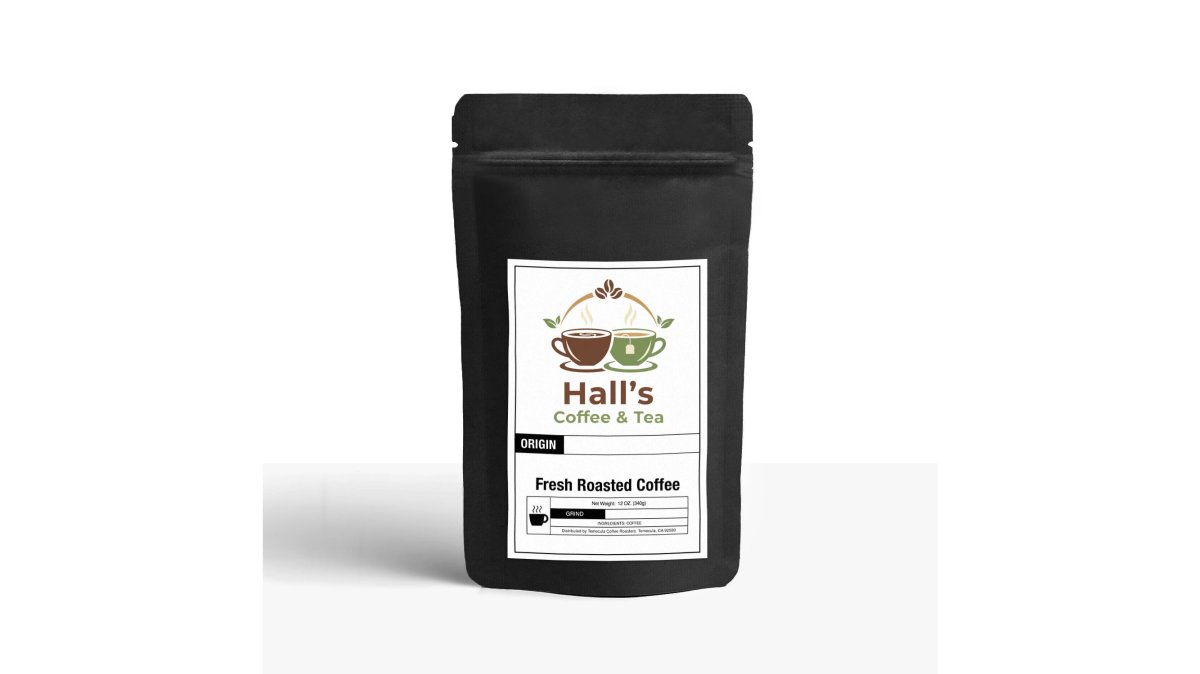
The beans you start with decide how gentle your cup turns out. Hall's Coffee & Tea blends and sources coffees specifically for cold brewing, so you're not guessing at grind and roast.
| Coffee | Roast | Tasting Notes | Best For |
|---|---|---|---|
| Cold Brew Coffee (French Roast) | Dark | Bold, smooth, no additives | Traditional cold brew drinkers |
| Cold Brew Coffee (Medium) | Medium | Chocolate, toffee, floral | Nitro and smooth cold brew |
| Peru Decaf | Medium | Caramel, smooth, citrus | Caffeine-sensitive stomachs |
| Coffee with Mushrooms Dark Roast | Dark | Lion's Mane, Cordyceps, Reishi | Added functional ingredients |
| Coffee with Mushrooms Medium Roast | Medium | Lion's Mane, Cordyceps, Reishi | Milder functional option |
Frequently Asked Questions
What is the most gut-friendly coffee?
Cold brew coffee is often the most gut-friendly option because cold-water extraction produces fewer acids than hot brewing. Choosing low acid coffee beans, such as a medium-roast single origin like Peru Decaf, can further reduce stomach irritation. Avoiding additives like dairy and artificial flavorings also helps. If you have a diagnosed condition like GERD, talk to your doctor before making coffee a daily habit.

What are the downsides of cold brew coffee?
Cold brew takes 12 to 24 hours to steep, so it requires planning ahead. It also tends to have a higher caffeine concentration per ounce than hot-brewed coffee, which matters if you are caffeine sensitive. Without proper filtering, some sediment remains in the cup. Cold brew also lacks the volatile aromatic compounds released during hot brewing, so the flavor profile is smoother but less complex.
What is healthier, iced coffee or cold brew?
Cold brew is generally the better choice for digestive health. Iced coffee is hot-brewed coffee poured over ice, so it retains the same pH levels and acid content as hot coffee. Cold brew uses immersion brewing with cold water, which extracts fewer acids and produces a smoother, less bitter cup. If acid reflux or gastric irritation is your concern, cold brew is the safer pick.
Is cold brew gastritis friendly?
Cold brew may be gentler on the stomach lining than hot coffee because it has lower perceived acidity. Some people with gastritis find they can tolerate cold brew when hot coffee causes discomfort. However, cold brew still contains caffeine and chlorogenic acid, which can trigger symptoms in sensitive individuals. Try a small amount first, and consider a decaf option like Peru Decaf if caffeine is a trigger.
Does cold brew have less acid than hot coffee?
Yes. Cold brew typically has a higher pH (meaning less acid) than hot-brewed coffee. The lower brewing temperature during cold-steeping means fewer acidic compounds are extracted from the coffee grounds. This is why cold brew is often recommended for people with acid reflux, GERD, or a sensitive stomach. The difference is measurable but not enormous, so individual tolerance still varies.
