

Fresh Roasted Coffee Delivered to Your Door
Table of Contents
- Why Fresh Roasted Coffee Delivered to Your Door Actually Tastes Different
- Roast to Order Coffee Beans: What the Process Really Means
- Hall's Coffee & Tea: Fresh Roasted Coffee Picks Worth Ordering
- Best Coffee Subscription Services: What to Look for Before You Commit
- Shipping, Delivery Timelines, and What to Do When Things Go Wrong
- How to Store Fresh Coffee Beans After Delivery
- How to Choose the Right Coffee for Your Palate
- Conclusion
Last Updated: August 20, 2026
Most coffee drinkers have experienced the quiet disappointment of opening a bag from the grocery store shelf: flat aroma, muted flavor, a cup that tastes tired before it's brewed. Fresh roasted coffee delivered to your door solves that problem at the source. At Hall's Coffee & Tea, we've built our catalog around the idea that freshness isn't a marketing claim, it's a measurable quality you can taste. Below, we cover everything from how the roasting process works to how to store your beans once they arrive.
Quick Picks:
- Best for Exploration: Single Origin Favorites Sample Pack, six origins, 2 oz each, $25.00
- Best Everyday Drinker: House Blend, medium roast, smooth and consistent, $18.99
- Most Unique: Whiskey Barrel Aged, Guatemalan single origin aged 30 days in a bourbon barrel, $18.99
- Best for Cold Brew: Cold Brew Coffee Blend, coarse-ground, dark French roast, no additives, $18.99
Why Fresh Roasted Coffee Delivered to Your Door Actually Tastes Different
Fresh roasted coffee reaches the brewer within days of leaving the roaster, not weeks or months after sitting in a warehouse or on a retail shelf. The difference is immediate: brighter acidity, more complex aroma, and a body that feels alive rather than flat.

After roasting, coffee beans release carbon dioxide and begin absorbing oxygen. This oxidation steadily degrades the volatile compounds responsible for aroma and flavor. A bag roasted six weeks ago and one roasted six days ago contain the same beans, but they are not the same coffee.
Specialty Coffee Association's research on coffee freshness and degassing
Retail coffee bypasses freshness entirely. Most supermarket bags were roasted weeks or months before purchase. Delivery services that roast to order close that gap dramatically, putting beans in transit within 24-48 hours of the roast.
The Freshness Window: Why Roast Date Matters More Than You Think
The roast date is the single most important piece of information on a coffee bag. A best-by date tells you almost nothing useful. A roast date tells you exactly where you are in the freshness window.
For whole bean coffee, peak freshness is generally between four days and three weeks post-roast. Before four days, beans are still degassing heavily and can taste sharp. After three weeks, oxidation noticeably flattens the flavor profile.
Roast Date Verification Checklist:
- Confirm a printed roast date (not just a best-by date) appears on the bag
- Check that the roast date is within the last 7-14 days at time of receipt
- Look for a one-way valve on the bag, which allows CO2 to escape without letting oxygen in
- If no roast date is visible, contact the roaster before reordering
Many providers print vague "freshness" language without a real date. If a bag doesn't show when it was roasted, treat it as a red flag.
Roast to Order Coffee Beans: What the Process Really Means
Roast to order is a fulfillment model where beans are roasted after a customer places an order, not before. This eliminates the inventory buffer that causes most commercial coffee to go stale in transit. From roaster to doorstep, this often takes two to four days. Compare that to retail coffee, which may sit in a distribution center for months.
Small-batch roasting allows for tighter control over roast profiles, more consistent heat application, and better traceability back to the grower. The result is a cup with more defined tasting notes and fewer scorched or papery off-flavors.
Single-Origin vs. Blends: Which Is Right for Your Cup?
Single-origin coffee comes from one specific farm, cooperative, or region. Blends combine beans from multiple origins to achieve a consistent, balanced flavor profile.
Single-origin coffees are best for drinkers who want to taste terroir: the altitude, soil type, and processing method that make a Sidama Ethiopian different from an Antigua Guatemalan. Blends solve a different problem: consistency and reliability for everyday drinkers.
| Feature | Single-Origin | Blend |
|---|---|---|
| Flavor complexity | High, distinctive | Balanced, consistent |
| Seasonal variation | Yes | Minimal |
| Best brew method | Pour-over, drip, French press | Espresso, drip, capsule |
| Traceability | Farm or cooperative level | Multi-origin sourcing |
| Best for | Flavor exploration | Daily reliability |
Hall's Coffee & Tea: Fresh Roasted Coffee Picks Worth Ordering
Hall's Coffee & Tea roasts to order across its entire catalog, meaning every bag ships fresh. All options are priced at $18.99 for standard selections, with sample packs at $25.00, and free US shipping on orders.
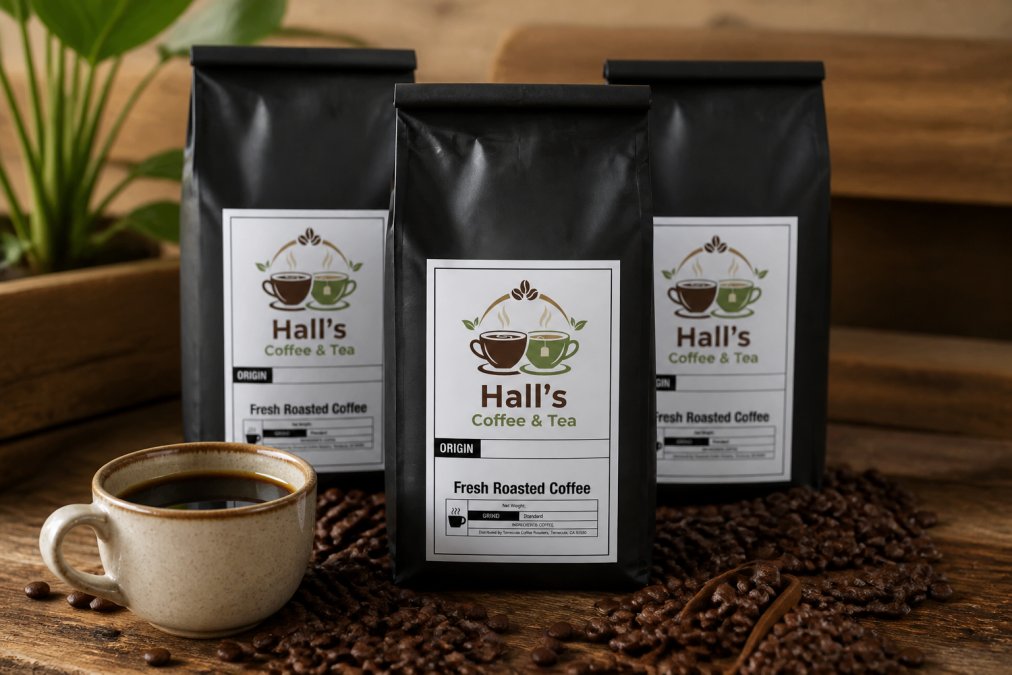
Single-Origin Selections
Brazil Santos ($18.99) is the right starting point for drinkers new to single-origin coffee. Grown at 750-1,050 meters using a pulped natural process, this medium roast delivers cocoa notes, smooth body, and no sharp edges.
Ethiopia Natural ($18.99) is for flavor explorers. Sourced from smallholder farmers in the Sidama zone at 1,700-1,900 meters using a full natural method, this med-light roast delivers milk chocolate, fruity, and caramel notes that change as the cup cools.
Guatemala ($18.99) hits the sweet spot between brightness and depth. Fully washed and sun dried at 1,200-1,616 meters, the tasting profile runs dark chocolate, bright fruit, and butterscotch. The volcanic loam soil produces a clean, structured acidity that works well with both drip and espresso.
Blends and Specialty Options
House Blend ($18.99) is the everyday workhorse: a medium roast of select coffees from Central and South America with nutty, sweet chocolate, mild citrus, and a clean bright finish.

Whiskey Barrel Aged ($18.99) is the most unusual option. Single-origin Guatemalan coffee aged 30 days in a bourbon barrel before roasting, creating layered depth without tasting like a gimmick.
Cold Brew Coffee ($18.99) is purpose-built: dark French roast, very coarse grind, no additives, calibrated specifically for the long steep times involved.
12 Pack Single Serve Coffee Capsules ($15.00) seal the "Original Roast" signature blend with no oxygen inside each capsule, preserving freshness without refrigeration.
Sample Packs: The Smart Way to Start
Best Sellers Sample Pack ($25.00) includes six 2 oz packs covering the full roast spectrum from medium to dark and both blends and single-origins.
Single Origin Favorites Sample Pack ($25.00) includes six 2 oz packs: Brazil Santos, Colombia, Costa Rica, Ethiopia, Honduras, and Tanzania.
Best Coffee Subscription Services: What to Look for Before You Commit
The best coffee subscription services share four qualities: a confirmed roast date on every bag, flexible delivery frequency, transparent sourcing information, and a clear exit process.
Roast Profiles and Delivery Frequency
Roast profile flexibility matters more than most buyers realize. Before subscribing, confirm that the service offers at minimum light, medium, and dark roast options. Delivery frequency should match your consumption rate. A household that brews one pot per day will exhaust a 12 oz bag in roughly a week; a solo drinker may only need delivery every three to four weeks. Verify whether you can order whole bean or ground coffee, as whole bean preserves freshness significantly longer.
National Coffee Association's guide to coffee freshness and storage
Organic Certification, Fair Trade, and Ethical Sourcing
Organic certification, fair trade status, and direct trade sourcing are not interchangeable terms.
Organic certification (USDA) means the coffee was grown without synthetic pesticides or fertilizers. Fair Trade certification sets minimum price floors and labor standards. Direct trade describes a relationship where a roaster sources directly from a farm or cooperative, often paying above fair trade minimums.
When evaluating a subscription, look for specific grower information: farm name, region, altitude, and processing method. That level of detail signals a real sourcing story.
Your Coffee Subscription Exit Strategy
Before subscribing, confirm how to pause a shipment, how to cancel, and whether there's a minimum commitment period. A good exit strategy also means knowing what to do with excess coffee. Consider freezing unopened bags in airtight containers (whole bean only, use within a month of thawing), gifting bags, or adjusting your delivery frequency before canceling.
Shipping, Delivery Timelines, and What to Do When Things Go Wrong
Standard shipping timelines for roast-to-order coffee typically run two to five business days from roast to doorstep. This means your beans arrive within the optimal freshness window.
For rural addresses or inconsistent carrier service, use a delivery address where someone can receive the package, track your shipment and bring it inside quickly, and photograph any damage immediately. Hall's Coffee & Tea offers free US shipping across its catalog and will address damaged or incorrect orders when contacted with your order number and photos.
How to Store Fresh Coffee Beans After Delivery
Proper storage after delivery is where most gains from roast-to-order coffee are either preserved or wasted. Fresh beans require four conditions: darkness, low oxygen, stable temperature, and low humidity.
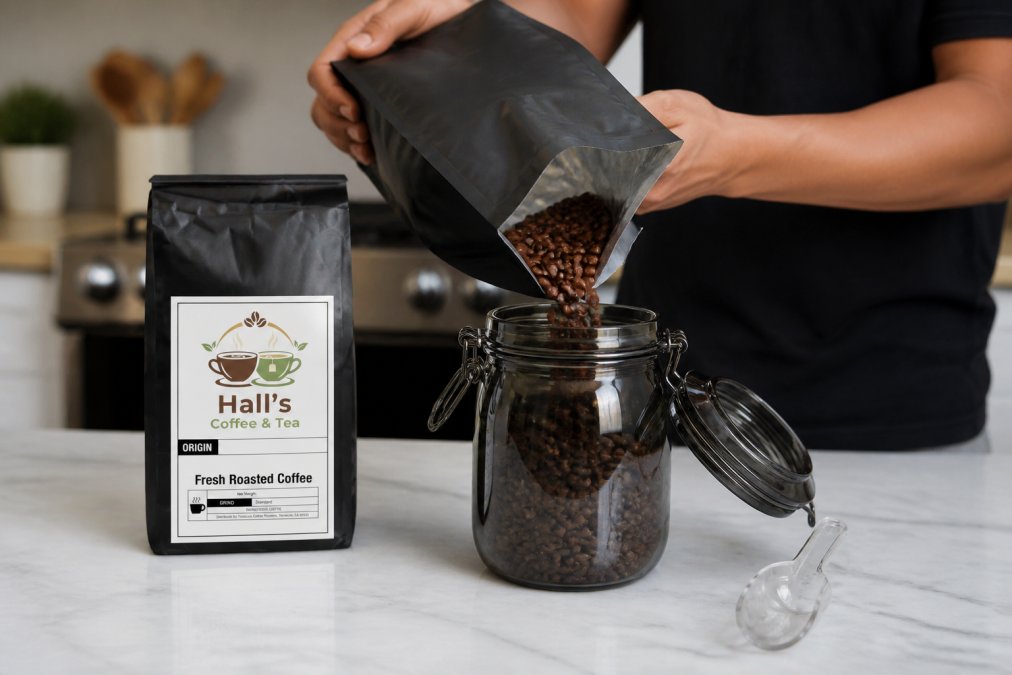
The bag your coffee arrives in is usually the best short-term storage container. Quality roasters seal their bags with one-way valves that let CO2 escape without allowing oxygen in. Keep the bag sealed between uses, squeeze out excess air, and fold the top down tightly.
For longer storage, transfer beans to an opaque, airtight container kept at room temperature away from direct sunlight and heat sources. Avoid the refrigerator; moisture cycling introduces humidity that damages the bean surface. Freezing is acceptable for long-term storage of unopened bags only. When ready to use, let the bag come to room temperature before opening.
According to the Specialty Coffee Association's brewing guidelines, ground coffee should be used within 30 minutes of grinding for best results. Grinding immediately before brewing preserves more aroma and flavor than almost any other storage practice.
| Storage Method | Duration | Notes |
|---|---|---|
| Original sealed bag (room temp) | Up to 3 weeks post-roast | Best for immediate use |
| Airtight opaque container (room temp) | 2-3 weeks | Keep away from heat and light |
| Freezer (unopened bag, whole bean) | Up to 1 month | Thaw fully before opening |
| Pre-ground (room temp) | 1-2 days | Significant flavor loss after 30 min |
How to Choose the Right Coffee for Your Palate
Choosing the right fresh roasted coffee starts with two honest questions: how do you brew, and what flavors do you actually enjoy?
Brew method narrows the field significantly. Espresso machines amplify both sweetness and bitterness, making medium to dark roasts with lower acidity ideal. Pour-over and drip methods highlight brightness and delicate flavors, making them ideal for light to medium roasts with complex tasting notes. Cold brew requires a coarser grind and darker roast to balance the long extraction time.
If you enjoy dark chocolate, roasted nuts, or caramel, you'll gravitate toward medium to dark roasts from Central and South American origins: Brazil, Guatemala, Honduras, Peru. If you prefer fruit-forward, floral, or unusual flavors, medium-light roasts from African origins, particularly Ethiopia and Tanzania, will be more interesting.

A common mistake is choosing a roast level based on perceived strength. Dark roast does not mean more caffeine. Lighter roasts actually retain slightly more caffeine by weight because the roasting process breaks down caffeine molecules over time. Strength in the cup is determined by your coffee-to-water ratio, not the roast level.
For drinkers who describe themselves as "not really a coffee person," the House Blend or Breakfast Blend are the right starting points. Both are medium roast, smooth, consistent, and forgiving across a range of brewing methods and water types.
Frequently Asked Questions
How do I know if the coffee beans I ordered online are truly fresh?
Check the roast date printed on the bag, not a 'best by' date, but the actual date the coffee was roasted. Fresh roasted coffee beans are generally at peak freshness between 5 and 21 days after roasting. If a bag only lists a best-by date months out with no roast date, that's a red flag. Roast-to-order services like Hall's Coffee & Tea roast after you place your order, so the roast date and your order date will be very close together.
What are the benefits of roast-to-order coffee delivery?
When coffee is roasted to order, it ships within days of coming out of the roaster rather than sitting in a warehouse for weeks. That means the aroma, acidity, and body you taste are as close to the roaster's intent as possible. Grocery store coffee can sit on shelves for months after roasting. Roast-to-order delivery cuts that lag dramatically, giving you beans that are genuinely at or near their peak freshness window when they arrive at your door.
How often should I have coffee delivered to stay within the freshness window?
For whole bean coffee, most roasters recommend consuming beans within 2 to 4 weeks of the roast date for the best flavor profile. Order frequency depends on how much you brew: a household going through roughly 12 oz per week should order every 2 to 3 weeks. Ordering too far in advance means beans sit past their freshness window before you finish them. Start with one bag, track how long it lasts, then set your delivery cadence from there.
What happens if my coffee order arrives damaged or late?
Contact the retailer's customer service team as soon as you notice the issue, photograph the packaging before opening if there is visible damage. Reputable roasters will typically reship or refund orders that arrive damaged. For late deliveries, check your tracking number first; carrier delays during peak seasons are common. If the package is significantly delayed and beans arrive past their freshness window, reach out to the retailer and explain the situation, most will work with you.
Is fresh roasted coffee worth the higher price compared to grocery store bags?
Grocery store coffee is often roasted months before you buy it and relies on nitrogen flushing to slow staling, not eliminate it. Fresh roasted coffee delivered shortly after roasting gives you beans that still have their full aroma, nuanced flavor profile, and natural oils intact. For daily drinkers who brew at home, the difference is noticeable cup to cup. At $18.99 per bag for Hall's Coffee & Tea's single-origin selections, the cost per cup is comparable to a mid-range grocery bag, with a significantly fresher result.
Hall's Coffee & Tea ships free across the US and roasts every order fresh. Whether you're a daily drinker looking for a reliable morning cup or a home barista chasing specific tasting notes, the catalog covers both ends of the spectrum. Browse the full selection and find your next bag at hallscoffeeandtea.com.
SHOP COFFEE
This article was written using GrandRanker
