

Single Origin vs Blend Coffee Explained
Table of Contents
- Single Origin vs Blend Coffee: Core Differences
- Understanding Tasting Notes in Coffee
- Coffee Roast Profiles Explained
- Flavor Profile and Consistency: What Changes Between Origins and Blends
- Best Coffee Beans for Home Brewing
- Which Should You Choose for Your Brewing Method
- Storage and Freshness: Keeping Your Beans at Peak Quality
Last Updated: August 24, 2026
Single Origin vs Blend Coffee: Core Differences
When choosing coffee, you're really making a choice between two philosophies. Single origin coffee comes from one specific geographical region, farm, or micro-lot, say, Colombia or Brazil Santos, grown at a particular altitude and processed to highlight that terroir. Blend coffee combines beans from multiple origins to create a unified flavor profile that stays consistent batch after batch.

Single origin coffees express nuance and complexity; blends prioritize balance and consistency. Neither is objectively better, the choice depends on what you want from your cup.
The sourcing and traceability differ fundamentally. With single origin, you can trace beans back to specific growers, sometimes individual farms. Specialty Coffee Association standards define single origin as coffee from one country, region, or farm. Blends pool beans from multiple sources, making the supply chain more complex but the final product more stable. If your favorite single origin has a bad harvest, that coffee disappears. A well-designed blend absorbs those disruptions.
Understanding Tasting Notes in Coffee
Tasting notes aren't marketing fluff, they're a precise language for describing what's actually in your cup. When you see "dried orange, berry, chocolate" on a bag of Colombia coffee, those notes come from real sensory evaluation.
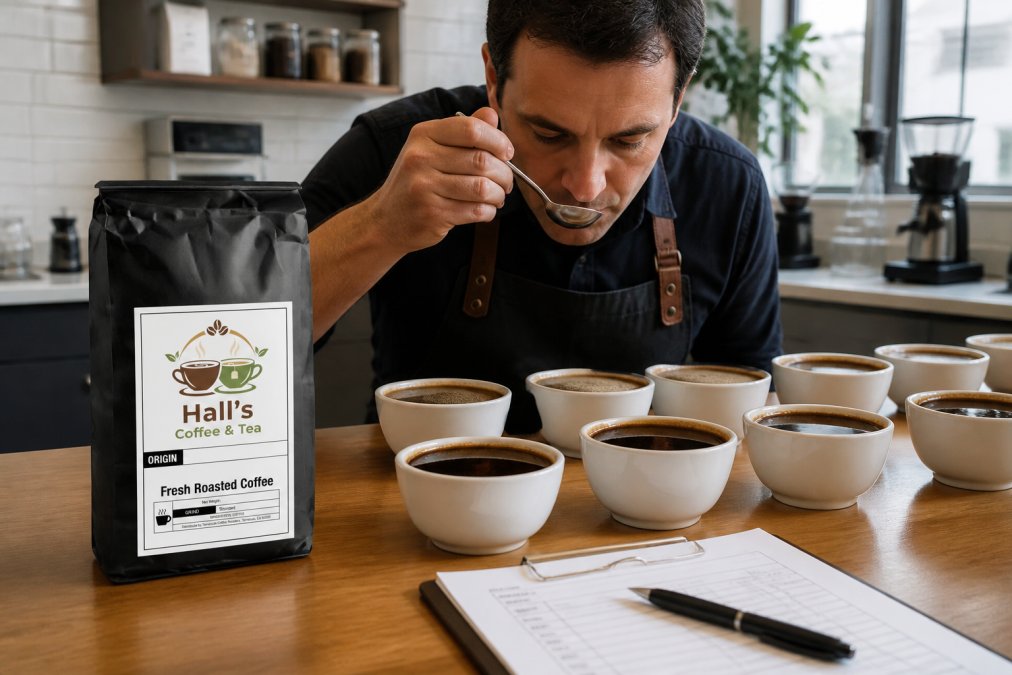
Single origin coffees tend to have more pronounced, distinctive tasting notes because they express the characteristics of one place. Colombia single origins often show berry and citrus brightness because of their altitude and washed processing. Brazil Santos typically displays cocoa and nutty notes from its pulped natural processing and volcanic soil.

Blends are built around balance. A well-crafted blend combines beans specifically chosen so their tasting notes complement rather than compete. You might blend a bright, acidic Ethiopian with a smooth, chocolatey Brazilian to create something with nuance but not extremes.
The roaster's skill becomes visible in how beans are roasted. A medium roast preserves more origin character and acidity. A darker roast brings out chocolate, caramel, and spice notes while reducing brightness. Single origins are typically roasted to highlight their unique characteristics. Blends are roasted to achieve a specific target profile.
Understanding tasting notes helps you predict whether you'll enjoy a coffee. If you love bright, fruity flavors, single origins from high-altitude regions work better. If you prefer smooth, balanced cups with less acidity, blends designed for consistency are your move.
Coffee Roast Profiles Explained
Roast profile is the bridge between raw bean and what lands in your cup. During the first crack, water inside the bean turns to steam and the bean expands audibly, marking the transition from light to medium roast. Push further and you reach second crack, where the bean's cellular structure breaks down and oils migrate to the surface, creating medium-dark and dark roasts.
Single origin coffees are often roasted lighter to preserve their origin character and acidity. A medium roast on Ethiopia or Colombia lets the terroir shine through. Roast it too dark and you lose those distinctions.
Blends, engineered for balance, can handle varied roast levels. Hall's Coffee & Tea's Breakfast Blend is a medium roast because that level hits the balance point the blend was designed for: smooth enough for morning drinking, complex enough to be interesting.
The roaster controls extraction by managing heat intensity and duration. Faster roasts preserve acidity and origin character. Slower roasts allow more chemical development, bringing out deeper flavors. This is why single origins often use faster roasts and blends sometimes use slower ones.
Flavor Profile and Consistency: What Changes Between Origins and Blends
Single origin coffees offer flavor clarity, you taste what that specific place and process produced. Blends offer consistency, you know what you're getting every time.
Single origins are subject to harvest variation. Weather, altitude, soil conditions, and picker timing all shift year to year. Specialty coffee enthusiasts seek this nuance. Blends eliminate this problem through deliberate mixing. A roaster samples beans from multiple lots and origins, then adjusts the blend ratio to hit a target flavor profile. The result is consistency.
The trade-off is complexity. A single origin might surprise you with unexpected floral notes or citrus brightness. A blend is predictable by design.
For espresso, this distinction matters enormously. Espresso amplifies everything, acidity, sweetness, body, bitterness. A single origin espresso can be thrilling or challenging. A blend designed for espresso is balanced specifically for that brewing method, with acidity and body calibrated so the shot pulls smoothly.
| Characteristic | Single Origin | Blend |
|---|---|---|
| Flavor clarity | High, expresses terroir | Moderate, engineered balance |
| Consistency | Varies by harvest | Consistent batch to batch |
| Acidity | Often pronounced | Balanced for smoothness |
| Complexity | Distinctive, nuanced | Integrated, balanced |
| Best brewing method | Filter, pour-over | Espresso, automatic drip |
| Price predictability | Fluctuates seasonally | Stable year-round |
Best Coffee Beans for Home Brewing
Choosing the right beans depends on your brewing method, taste preferences, and how much variation you're willing to accept.
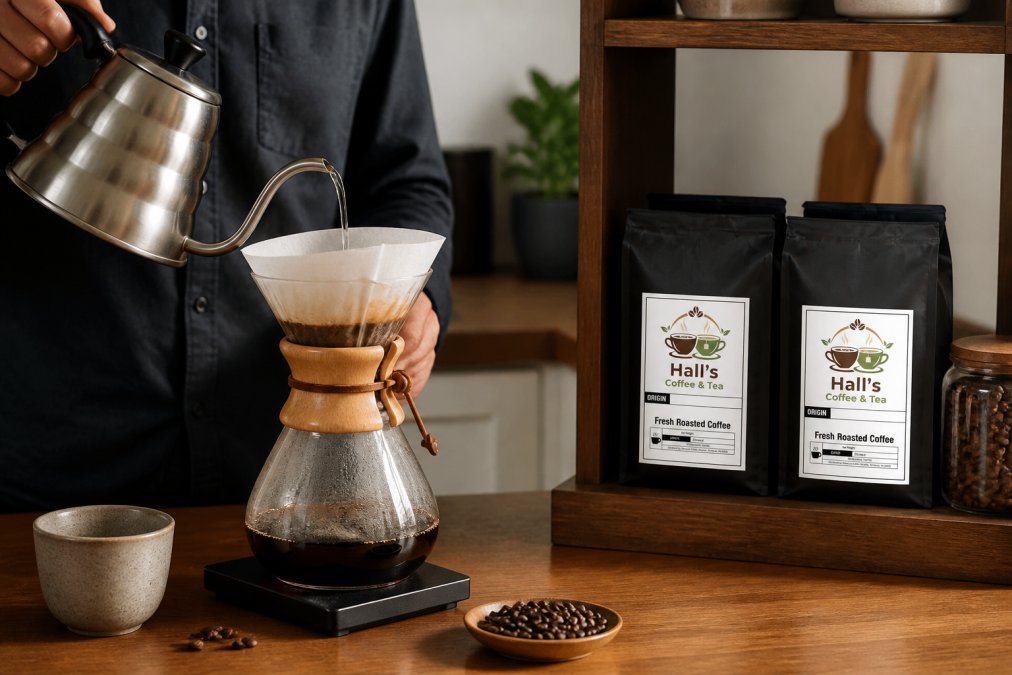
For pour-over and filter brewing, single origins shine. The slower extraction and larger contact time let you taste the bean's full character. A Colombia from Hall's Coffee & Tea works beautifully here, the medium roast preserves the dried orange and berry notes, and the brewing method extracts them cleanly.
For automatic drip machines and French press, blends are often better. These methods are less precise, and a well-designed blend tolerates this inconsistency because it's already balanced. Hall's Coffee & Tea's Breakfast Blend delivers consistent results across different brewing scenarios.
For espresso, you need beans specifically intended for espresso. Single origins can work, but they're less forgiving. Blends designed for espresso have body and sweetness calibrated for the method.
If you're new to specialty coffee, start with a blend. Hall's Coffee & Tea's Single Origin Favorites Sample Pack offers 2-ounce samples of six different origins so you can taste what terroir means without committing to full bags.
Keep beans in an airtight container away from heat and light. Whole beans stay fresh for 2-4 weeks after opening. Ground coffee degrades faster because increased surface area accelerates oxidation.
Which Should You Choose for Your Brewing Method
Your brewing method should drive your bean choice.
Pour-over methods (Chemex, V60, Melitta, Kalita Wave) benefit from single origin coffee. These methods give you control over water temperature, pour rate, and contact time, letting you extract a single origin's nuance. A Brazil Santos or Colombia single origin reveals its characteristics through pour-over in ways automatic drip can't match.
Automatic drip machines work better with blends because they lack precision. A blend's balanced profile tolerates inconsistencies. You get a decent cup reliably.
French press and immersion brewing work well with medium to medium-dark roasts. The extended steeping time extracts more oils and body, suiting darker roasts and blends designed for full immersion.
Espresso demands precision. Beans need enough body and sweetness to balance the intensity. Many single origins pull sour in espresso because their acidity isn't balanced by body. Espresso-specific blends work better.
Turkish coffee and Moka pot brewing need medium to medium-dark roasts with good body. A blend like Hall's Coffee & Tea's Breakfast Blend works well because the body is calibrated for these methods.
Storage and Freshness: Keeping Your Beans at Peak Quality
Roast date matters more than best-by date. Coffee is freshest 5-14 days after roasting, when the beans have finished degassing but haven't begun staling (peer-reviewed research). Beans more than 30 days old start losing flavor clarity and brightness.
Storage conditions determine how fast beans degrade. Whole beans in an airtight container away from heat and light stay fresh for 2-4 weeks. Ground coffee degrades much faster because increased surface area accelerates oxidation. Grind only what you'll use within a few days.
Room temperature storage is fine. Refrigeration is controversial, condensation can form when beans warm up, introducing moisture. Freezing works if beans are in an airtight container and you remove them once, not repeatedly.
Humidity is the silent killer. Coffee absorbs moisture from humid air, promoting mold and degrading flavor. Keep beans in a dry environment. Vacuum-sealed bags with one-way valves protect beans during shipping, but once opened, transfer beans to an airtight container.
According to research on coffee storage from the Specialty Coffee Association, beans stored in optimal conditions maintain their flavor profile for 4 weeks. After that, degradation accelerates. Buy smaller quantities more frequently rather than buying in bulk.
Fresh beans produce bright, complex flavors. Stale beans taste flat and dull. If your coffee tastes flat, the beans are likely past their prime.
Choosing between single origin vs blend coffee ultimately depends on what you value. Do you want to taste what a specific place produces, accepting seasonal changes? Choose single origin, try Hall's Coffee & Tea's Colombia or Brazil Santos. Do you want reliable consistency and balanced flavor every morning? Choose a blend like Hall's Coffee & Tea's House Blend, engineered for smooth, predictable results. The best approach is to try both. Hall's Coffee & Tea's Single Origin Favorites Sample Pack lets you taste six different origins in 2-ounce portions, so you can discover your preferences without committing to full bags. Start there, dial in your brewing method, and build your collection from what you actually enjoy.

Frequently Asked Questions
Is single origin coffee better than a blend?
Neither is objectively better, it depends on your preferences and brewing method. Single origin coffee highlights the unique terroir and flavor complexity of a specific geographical region, offering distinct tasting notes and nuance. Blends provide consistency and balance by combining beans from multiple origins. Single origin excels for filter coffee and pour-over methods where flavor clarity matters. Blends work well for espresso and everyday brewing because the combined beans create a smoother, more uniform flavor profile. Try our Single Origin Favorites Sample Pack to explore different regions and discover which style resonates with your palate.
What does single origin mean in coffee?
Single origin coffee comes from one specific geographical region, farm, or micro-lot, rather than a blend of beans from different sources. This traceability means you experience the distinct characteristics shaped by that region's altitude, soil type, climate, and processing method. For example, our Brazil Santos comes from Fazenda Santa Barbara with tasting notes of cocoa and elegance, while our Colombia offers dried orange, berry, and chocolate from Medellin's volcanic loam soil. Single origin coffees showcase the full complexity and acidity profile unique to their terroir, making them ideal for specialty coffee enthusiasts exploring different regions.
Why are coffee blends created?
Blends are crafted to achieve specific flavor goals and consistency that single origins alone cannot deliver. Roasters combine beans from different origins to balance acidity, body, and tasting notes into a harmonious cup. Our House Blend mixes Central and South American coffees to create a smooth, clean profile with nutty chocolate and mild citrus notes. Blends also offer practical advantages: they provide roast consistency across batches, work well across multiple brewing methods, and allow roasters to optimize flavor for espresso or filter coffee. Blends are ideal for those seeking reliable, balanced flavor without the variability that can come with single origins.
Which coffee is best for espresso: single origin or blend?
Blends are generally better suited for espresso because they're formulated for the high-pressure extraction that espresso requires. The combination of beans from different origins creates a balanced body and crema that espresso machines work best with. Single origin coffees can work in espresso but often require precise grind adjustment and temperature control because their acidity and extraction profile may be more pronounced. If you're new to espresso, start with a blend like our Breakfast Blend for consistent, reliable shots. As your skills develop, experiment with single origins to explore how different geographical regions and processing methods affect your espresso's flavor and body.
This article was written using GrandRanker
