

Authentic Loose Leaf Chai Tea: A 2026 Guide
Table of Contents
- What Is Authentic Loose Leaf Chai Tea?
- Key Ingredients in Authentic Loose Leaf Chai
- Traditional Masala Chai Recipe: A Step-by-Step Method
- How to Brew Loose Leaf Chai at Home
- Chai Tea Brewing Time: Getting It Right
- Loose Leaf vs. Tea Bags: What Actually Changes
- Sourcing, Caffeine, and What to Look For
- Frequently Asked Questions
Last Updated: September 22, 2026
What Is Authentic Loose Leaf Chai Tea?
Authentic loose leaf chai tea is a milk-based spiced tea made by simmering whole-leaf black tea with warming spices, milk, and sweetener. This guide from Hall's Coffee & Tea explains how to identify it and brew it properly. In India, the drink is simply called chai; "chai tea" is a redundancy, since chai means tea. What separates authentic loose leaf chai from carton concentrate is the brewing method: whole leaves and whole spices, simmered rather than steeped.

Chai vs. Masala Chai: What's the Difference?
The two terms are not interchangeable. Chai is the everyday milk tea served across India: black tea, milk, sugar, and often nothing else. Masala chai adds warming spices, which is what most people outside India picture when they say "chai." So the honest answer to what is authentic loose leaf chai tea depends on which version you mean.
Key Ingredients in Authentic Loose Leaf Chai
Authentic loose leaf chai relies on two things: a strong black tea base and freshly crushed whole spices. Skip pre-ground spice jars. Whole cardamom pods, cinnamon bark, cloves, black peppercorns, ginger root, star anise, and fennel seeds release far more aroma when cracked just before brewing. A CTC or broken-leaf black tea gives the body and strength that survives milk, while a delicate leaf disappears behind it.
Black Tea Base: Why Assam Tea Matters
Assam tea is the backbone of traditional masala chai. Grown in the Brahmaputra valley in northeast India, Assam has a malty, full-bodied character that holds its own against milk and spice. A lighter tea, like a Darjeeling first flush, simply gets buried. For a chai that tastes like the real thing, start with a strong Assam loose leaf.
Warming Spices and Their Aromatic Profile
Each spice plays a distinct role. Cardamom pods bring floral sweetness, cinnamon bark adds warmth, cloves contribute a sharp bite, and black peppercorns deliver heat at the finish. Ginger root gives the brew its signature kick, while star anise and fennel seeds round things out with a gentle licorice note. Use them whole and crush them lightly before they hit the pan.
A Master Spice Ratio You Can Build From
Most recipes hand you a fixed list. A more useful approach is a ratio you can scale and adjust, because "authentic" is a range, not a single formula. For two cups, start from this baseline and then tune it:
- 4 green cardamom pods
- 1 small cinnamon stick (about 1 inch)
- 3 whole cloves
- 4 black peppercorns
- 1 teaspoon grated fresh ginger
- 1 small piece star anise (optional, for a licorice note)
- 1/4 teaspoon fennel seeds (optional, for sweetness)
Traditional Masala Chai Recipe: A Step-by-Step Method
A traditional masala chai recipe comes down to ratios and patience, not complicated technique. The method below makes two cups.
- Crush 4 cardamom pods, 1 small cinnamon stick, 3 cloves, and 4 black peppercorns in a mortar.
- Add 1 cup water and the spices to a saucepan. Bring to a boil, then simmer for 2 minutes.
- Add 2 teaspoons Assam loose leaf tea and 1 teaspoon grated ginger. Simmer 2 more minutes.
- Pour in 1 cup whole milk and 2 teaspoons sugar. Return to a gentle simmer.
- Simmer 3 to 5 minutes, watching closely so it does not boil over.
- Strain into cups through a fine mesh infuser or sieve.
How to Brew Loose Leaf Chai at Home
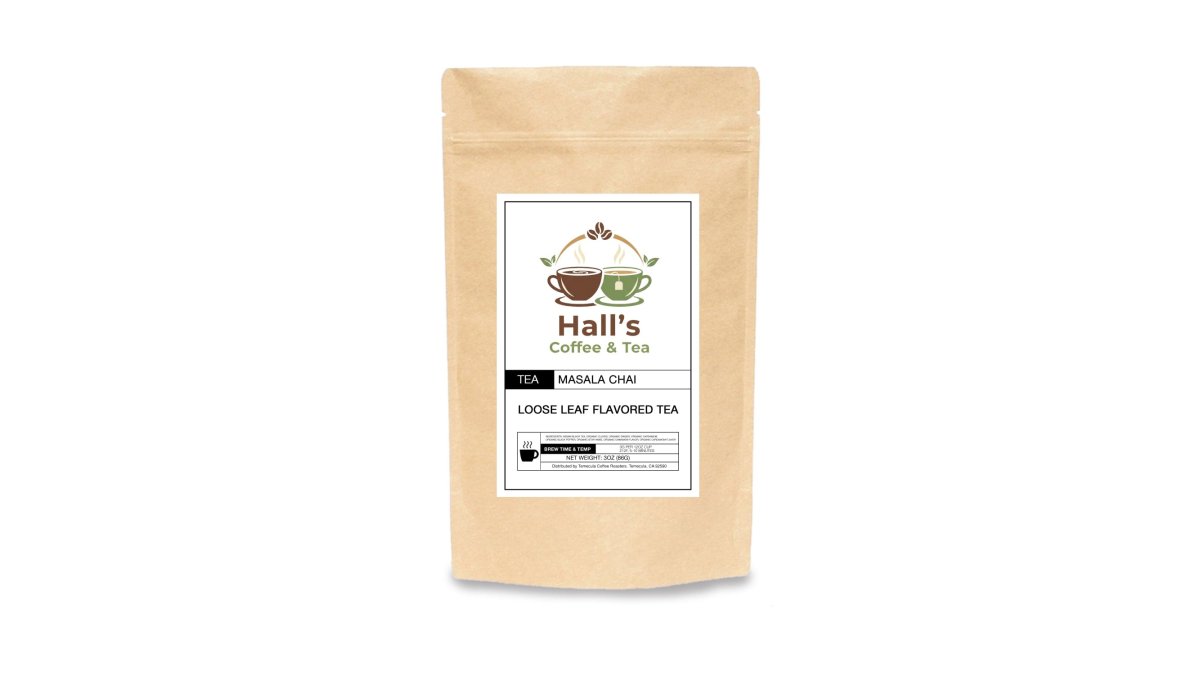
Learning how to brew loose leaf chai at home is mostly about controlling heat and time. Unlike green tea, chai is simmered, not steeped, because the tea and spices need sustained heat to release their flavor. If you are new to loose leaf, Hall's Coffee & Tea carries a Masala Chai blend built for this exact method. You need only a small saucepan and a strainer.
Water-to-Milk Ratios for a Balanced Cup
A 1:1 ratio of water to milk is the safest starting point. Equal parts give you a creamy cup that still tastes like tea. For a lighter, more tea-forward drink, try 2 parts water to 1 part milk. For a richer, dessert-style cup, flip it to 1 part water and 2 parts milk. Adjust the sugar separately, since sweetness masks spice if you overdo it.
Chai Tea Brewing Time: Getting It Right
Chai tea brewing time runs about 8 to 12 minutes from start to finish. The spices need the first 2 to 3 minutes in boiling water to open up. The tea then needs another 2 to 3 minutes before the milk goes in. Once the milk is added, keep the pan at a low simmer for 3 to 5 minutes.
Troubleshooting Bitter Brews
A bitter cup almost always comes from overcooking the tea, not the spices. Black tea releases tannins the longer it simmers, and past about 5 minutes in milk those tannins dominate everything else. Cut your simmer time and taste as you go. If the chai already tastes bitter, extra milk or a pinch more sugar will soften it.
Loose Leaf vs. Tea Bags: What Actually Changes
Loose leaf outperforms tea bags for one structural reason: leaf size. Tea bags hold dust and fannings, the smallest particles, which release flavor fast but fade just as quickly and turn bitter under a long simmer. Whole loose leaf expands gradually and holds up to milk and heat. That is why a bagged chai tastes thin while a loose leaf chai tastes full.
| Factor | Loose Leaf | Tea Bags | Sachets |
|---|---|---|---|
| Leaf size | Whole or broken | Dust and fannings | Small broken |
| Simmer tolerance | High | Low, turns bitter | Moderate |
| Flavor depth | Full-bodied | Thin | Medium |
| Best for | Traditional chai | Quick single cups | Travel and offices |
Sourcing, Caffeine, and What to Look For
Origin and freshness decide how good your chai can be. Look for single-origin Assam with a harvest date on the package, not just a best-by date. Organic certification tells you how the leaf was grown, not how fresh it is. Chai is a black tea drink, so expect a moderate caffeine level similar to standard black tea, though a longer simmer extracts more.
Reading a Chai Label Like a Buyer
The front of a package is marketing; the back is information. A few things are worth checking before you buy:
- Named origin. "Assam" or an estate name tells you something. A vague "black tea" or "chai blend" tells you nothing about what is in the bag.
- Harvest date, not just best-by. Best-by dates are often set years out and say little about freshness. A harvest date lets you judge how long the leaf has been sitting.
- Whole spices vs. "natural flavors." If the ingredient list leans on flavorings rather than cardamom, cinnamon, clove, and pepper, you are buying aroma, not spice.
- Leaf grade. CTC (crush-tear-curl) and broken-leaf teas are built for milk and heat. Whole-leaf orthodox teas can work too, but they brew lighter and need more leaf.
- Certification. USDA Organic is a real, verifiable standard for how the tea and spices were grown. It is a useful signal, but it is not a freshness signal, so pair it with a harvest date.
Why Single-Origin Spices Matter
A generic spice blend can hide a lot. When cardamom, cinnamon, and pepper are sourced from named regions and blended in known proportions, the cup tastes consistent and the flavors stay distinct instead of muddying into one warm note. Single-origin spices also tend to be fresher, since a supplier who cares about origin usually cares about turnover. The practical test is your nose: crack a pod or peppercorn and smell it.
Caffeine in Chai: What to Actually Expect
Chai's caffeine comes almost entirely from the tea, not the spices. A typical 8-ounce cup of black tea brewed normally lands around 30 to 50 milligrams, well under a standard cup of coffee. But chai is not brewed normally: simmering tea in water and then milk for several minutes extracts more caffeine than a quick steep, so a strongly simmered cup can run higher.
Storing Your Chai for Freshness
Once you have good leaf and good spices, storage decides how long they stay good. Keep tea in an airtight, opaque container away from light, heat, and moisture, and away from strong-smelling spices or coffee, because tea absorbs odors readily. Whole spices keep far longer than ground ones, so store them whole and crush only what you need per batch.
Frequently Asked Questions
What ingredients are in authentic masala chai?
Authentic masala chai combines a strong black tea base, traditionally Assam tea, with warming spices such as cardamom pods, cinnamon bark, cloves, black peppercorns, ginger root, star anise, and fennel seeds. Milk and sweetener are added during brewing. The exact blend varies by region and family, but the balance of bold tea and aromatic spices is what defines the drink. Loose leaf blends like Hall's Masala Chai deliver this full-bodied, aromatic character in one scoop.
Is loose leaf chai tea better than tea bags?
Loose leaf chai typically offers a fuller aromatic profile because whole leaves and spices have more surface area to release flavor during steeping. Tea bags often contain finer particles that can turn bitter faster. With loose leaf, you control the quantity, brewing time, and water temperature, which means you can adjust strength to your taste. The trade-off is a few extra minutes of preparation and a simple infuser or brewing vessel.
Does authentic chai tea contain caffeine?
Yes. Because authentic chai uses a black tea base like Assam tea, it naturally contains caffeine. A typical 8-ounce cup brewed with black tea has roughly 30 to 50 milligrams of caffeine, though this depends on steeping time and leaf quantity. If you are sensitive to caffeine, you can reduce the steeping time or blend your chai with a decaffeinated black tea base. The spices themselves do not add caffeine.
How do you brew authentic loose leaf chai at home?
Bring water to a boil, add loose leaf chai and whole spices, and simmer for 3 to 5 minutes. Pour in milk and simmer another 2 to 3 minutes, then add sweetener to taste. Strain into a cup. The key is simmering rather than just steeping, which extracts the full flavor from the spices and tea leaves. A ratio of roughly 1 part water to 1 part milk works well, but adjust to your preference.
The hardest part of authentic chai is not the spice list; it is resisting the urge to rush the simmer. Hall's Coffee & Tea makes that easier with a Masala Chai blend built for the stovetop method, plus free US shipping and carefully sourced loose leaf tea delivered to your door. Get started with Hall's Coffee & Tea and brew a cup that tastes like it came from a street cart in Mumbai.
