

How to Store Coffee Beans for Freshness
Table of Contents
- Why Coffee Freshness Matters
- The Four Enemies of Coffee Freshness
- How Long Do Coffee Beans Stay Fresh
- Best Coffee Storage Containers and Materials
- Should You Freeze Coffee Beans
- Temperature, Light, and Humidity Control
- Storing Whole Beans vs. Pre-Ground Coffee
- The Degassing Phase and What It Means for Storage
Last Updated: August 23, 2026
Why Coffee Freshness Matters
The moment coffee beans are roasted, they begin losing flavor and aroma, with the most dramatic changes happening within the first two weeks (peer-reviewed research). If you've invested in premium, single-origin beans from Hall's Coffee & Tea or any specialty roaster, understanding how to store coffee beans for freshness becomes essential to preserving the nuanced flavors you paid for.
Stale beans produce flat, bitter coffee regardless of brewing technique. The aromatic compounds that make a light roast bright or a dark roast rich are volatile and escape when beans are exposed to oxygen. Temperature swings, humidity, and light exposure accelerate this process dramatically. When you know how to store coffee beans for freshness, you're extending the window during which those beans deliver their intended flavor profile.
The Four Enemies of Coffee Freshness
Coffee's worst enemies are oxygen, moisture, light, and heat.
Oxidation happens when oxygen contacts the coffee's surface. Once roasted, beans contain volatile aromatic compounds that create flavor and aroma. Oxidation breaks these compounds down, replacing complexity with staleness. Whole beans oxidize more slowly than pre-ground coffee because their surface area is smaller, but oxygen still penetrates over time.
Moisture is deceptive. High humidity promotes mold growth and chemical reactions that degrade flavor. Coffee is hygroscopic, meaning it absorbs moisture from the air. In humid climates, beans stored in porous containers will absorb ambient moisture within days, creating a musty, flat taste.
Light exposure, especially ultraviolet (UV) light, degrades the oils and compounds that define coffee's flavor profile. This is why specialty roasters package beans in opaque bags. Clear glass jars look beautiful but are among the worst storage choices for long-term freshness.
Heat accelerates every degradation process. Warm kitchens, sunlit countertops, and storage near stoves or ovens are ideal environments for staleness to develop. Temperature swings are particularly damaging because they cause condensation inside containers, which introduces moisture and promotes oxidation.
How Long Do Coffee Beans Stay Fresh
Freshly roasted beans hit their peak flavor between 5 and 14 days after roasting, when carbon dioxide (CO2) degassing has mostly completed and volatile aromatic compounds are still present (peer-reviewed research). After two weeks, flavor begins noticeably declining. By four weeks, most beans taste noticeably flatter, though they're still drinkable. Whole beans stored in an airtight container at room temperature remain acceptable for 6 to 8 weeks.
Pre-ground coffee deteriorates much faster. Within 15 minutes of grinding, significant aroma is lost (peer-reviewed research). Ground coffee stored in an airtight container stays reasonably fresh for 2 to 4 weeks, but flavor complexity diminishes rapidly compared to whole beans.
The roast date on your bag is your reference point. For maximum freshness, order in quantities you'll use within 3 to 4 weeks.
Best Coffee Storage Containers and Materials
The container you choose directly impacts how long your beans maintain peak flavor.
Airtight containers with one-way valves
One-way valves are the industry standard because they solve a specific problem: CO2 degassing. Immediately after roasting, beans release carbon dioxide. A one-way valve lets CO2 escape while preventing oxygen from entering. These containers typically keep beans fresh for 4 to 6 weeks when stored in a cool, dark place.

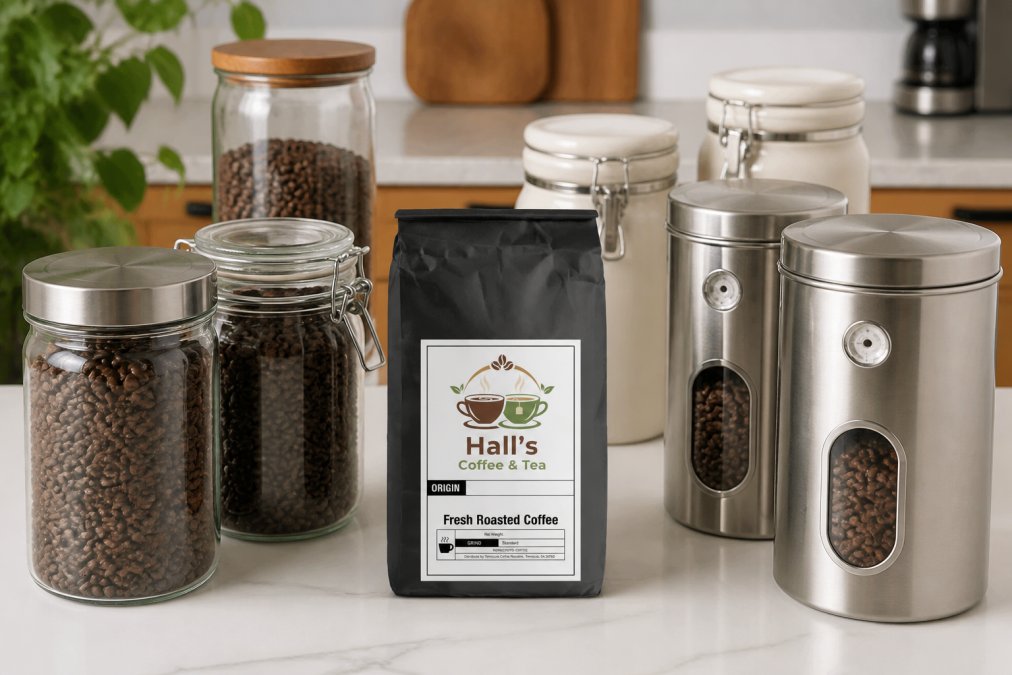
Glass vs. ceramic vs. stainless steel
Glass containers are visually appealing but problematic for long-term storage. Clear glass allows light to penetrate, accelerating oxidation and flavor loss. Opaque glass is better, but glass conducts temperature changes readily, causing condensation inside the container.
Ceramic containers with tight-fitting lids offer moderate protection. Ceramic doesn't conduct heat as readily as glass, but it's porous and can absorb ambient odors. Ceramic works well for short-term storage (2 to 3 weeks) but isn't ideal for extending freshness beyond that window.
Stainless steel containers are the best choice for serious coffee storage. Steel doesn't allow light penetration, conducts heat slowly, and maintains a stable internal environment. Stainless steel containers with airtight seals and one-way valves keep beans fresh longer than any other material.
Should You Freeze Coffee Beans
Freezing works if done correctly, but it requires careful execution. The theory is sound: freezing slows oxidation and volatile compound loss dramatically. However, freezing introduces a major risk: condensation. When frozen beans warm to room temperature, moisture condenses on their surface, promoting oxidation and mold growth.
The right approach: divide beans into weekly portions, seal each in an airtight bag, and freeze all portions at once. Remove only one week's portion at a time and allow it to reach room temperature before opening. Never refreeze thawed beans. This method extends freshness to 3 to 4 months. For most people, room-temperature storage in a quality airtight container is simpler and nearly as effective.
Temperature, Light, and Humidity Control
Your storage environment matters as much as your container.
Temperature stability is the priority. Ideal storage is between 60°F and 70°F. This cool, stable range slows oxidation without introducing condensation risks. Avoid storing beans near heat sources, stoves, ovens, or sunny windowsills.
Light protection requires storing beans in a dark location. A kitchen cabinet away from windows, a pantry, or a dark closet shelf all work well. Even opaque containers benefit from dark storage because some light penetrates over time.
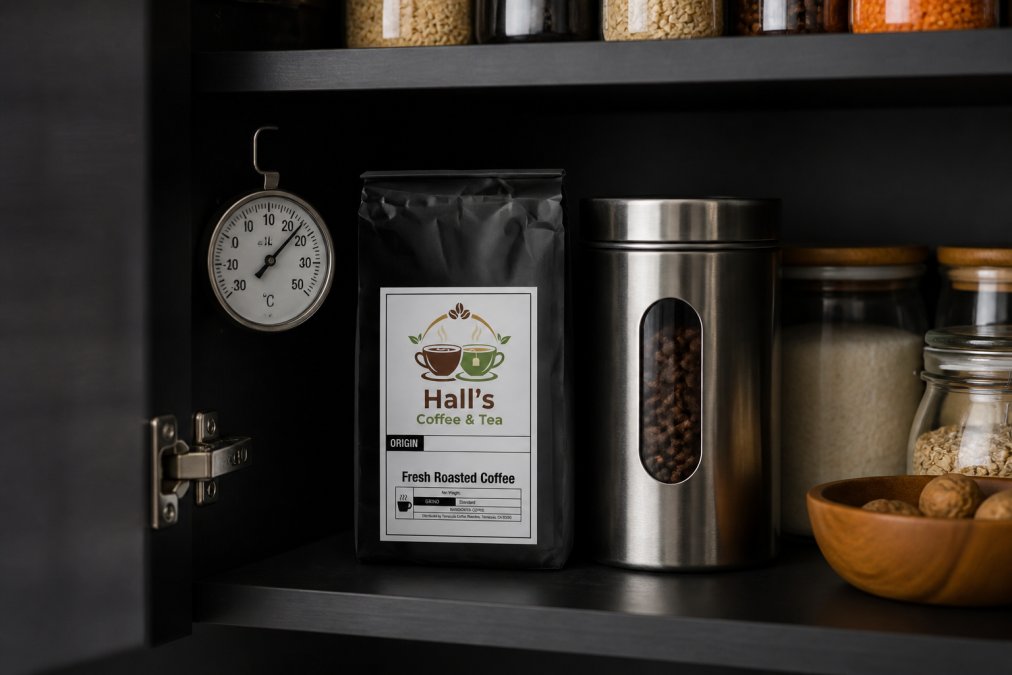
Humidity control depends on your climate. Aim for 50 to 60% relative humidity. In humid climates, store beans in a cabinet with a small silica gel packet to absorb excess moisture. Replace the packet monthly.
Storing Whole Beans vs. Pre-Ground Coffee
Whole beans have minimal surface area exposed to oxygen, which is why they stay fresh longer. Store whole beans in an airtight container with a one-way valve, in a cool, dark place. Under these conditions, they maintain excellent flavor for 4 to 6 weeks.
Pre-ground coffee is a different animal. Grinding dramatically increases surface area, exposing vastly more of the bean's interior to oxygen. Pre-ground coffee stored in an airtight container stays reasonably fresh for 2 to 4 weeks, but flavor complexity is already compromised compared to whole beans ground fresh.
If you buy pre-ground coffee, use it within two weeks. Better yet, invest in a burr grinder and buy whole beans. Grinding your own beans takes 60 seconds and transforms the flavor of your morning cup. Hall's Coffee & Tea offers both whole bean selections and instant coffee options for convenience, but for the best flavor experience, whole beans with fresh grinding is unmatched.
The Degassing Phase and What It Means for Storage
Immediately after roasting, beans release carbon dioxide (CO2). This degassing continues for 24 to 48 hours, with the most intense release happening in the first 12 hours. If beans are sealed in an airtight container too early, pressure builds inside, potentially forcing oxygen in through microscopic gaps.
The practical implication: if you receive freshly roasted beans, don't seal them in an airtight container immediately. Leave them in their original bag (which has a one-way valve) for the first 24 hours. After that, degassing has mostly completed, and you can transfer them to your long-term storage container.
The peak flavor window (5 to 14 days after roasting) is when degassing has completed and volatile compounds have stabilized. If you're buying from Hall's Coffee & Tea, check the roast date. Beans roasted 2 to 3 days before arrival will hit their peak flavor window shortly after they arrive, giving you the longest window of optimal freshness.
Proper storage transforms how your coffee tastes. The difference between beans stored in a clear jar on a warm counter and beans in an opaque, airtight container in a cool cabinet is dramatic. When you know how to store coffee beans for freshness, you're honoring both the roaster's work and your own investment in quality.
At Hall's Coffee & Tea, we believe that freshness starts with the roasting process, but it's preserved through storage. Our beans arrive in bags designed to protect them during the critical degassing phase. Once you receive them, transfer them to an opaque, airtight container with a one-way valve, store them in a cool, dark place between 60°F and 70°F, and use them within 4 to 6 weeks for peak flavor. For those seeking ultimate convenience without compromising on quality, our Instant Coffee offers the same premium sourcing in a shelf-stable format that maintains freshness for months.
The ritual of a perfect cup begins long before brewing, it begins the moment your beans arrive. Store them thoughtfully, and every brew will reflect the care you've invested.
| Storage Method | Duration | Best For | Key Requirement |
|---|---|---|---|
| Airtight container, room temp | 4-6 weeks | Daily drinkers | Cool, dark location |
| Airtight container, freezer | 3-4 months | Bulk buyers | Portioned, no refreezing |
| Original bag with one-way valve | 2-3 weeks | Fresh enjoyment | Away from heat/light |
| Pre-ground, airtight container | 2-4 weeks | Convenience | Use quickly |
Frequently Asked Questions
Is it okay to store coffee beans in a Ziploc bag?
A standard Ziploc bag offers minimal protection against oxidation and moisture. While it's better than no container, it lacks an airtight seal strong enough to prevent oxygen exposure and doesn't block light. For peak freshness, use an opaque airtight container with a one-way valve instead. If you must use a bag temporarily, squeeze out as much air as possible and store it inside an opaque container to limit UV light exposure.
How long do coffee beans stay fresh after opening the bag?
Whole coffee beans typically stay at peak freshness for 2 to 4 weeks after opening, depending on storage conditions. Once exposed to air and light, oxidation begins immediately, degrading the volatile compounds that create aroma and flavor profile. The roast date matters more than the purchase date, beans roasted more recently will maintain quality longer. Store opened beans in an airtight, opaque container in a cool, dark place to extend shelf life.
Should you freeze coffee beans to keep them fresh longer?
Freezing can extend shelf life if done correctly, but it introduces risks. When frozen beans thaw, condensation forms on the surface, introducing moisture that accelerates staling. If you choose to freeze, use an airtight, vacuum-sealed container to minimize condensation and thaw only what you need for a few days. Most coffee experts recommend storing beans in a cool pantry instead, as freezing can damage the delicate flavor compounds that make specialty beans worth buying.
What's the difference between storing coffee in the original bag versus a container?
The original bag from Hall's Coffee & Tea features a one-way valve designed to release carbon dioxide (degassing) while blocking oxygen entry. If the bag is unopened and stored properly, it protects beans effectively. Once opened, the valve loses effectiveness because air enters each time you access the bag. A dedicated airtight container with a one-way valve provides better long-term protection after opening, especially if you grind beans gradually over several weeks.
This article was written using GrandRanker
