

Is Premium Coffee Worth the Cost in 2026
Table of Contents
- What Defines Premium Coffee and Specialty Coffee vs Grocery Store Coffee
- The Cost Breakdown: Why Premium Coffee Costs More
- How to Identify High Quality Coffee Beans
- Best Coffee Beans for Home Brewing: What Actually Matters
- Cost-Per-Cup Analysis: Premium vs Standard Coffee
- The Brewing Skill Factor and Freshness ROI
- Is Premium Coffee Worth It for Your Routine
Last Updated: August 22, 2026
What Defines Premium Coffee and Specialty Coffee vs Grocery Store Coffee
Premium coffee is evaluated on specific quality markers: origin, altitude, processing method, freshness, and cupping score. Specialty coffees are typically grown at higher altitudes (1,200+ meters), hand-harvested, and processed with precision. Grocery store coffee often blends beans from multiple origins, sometimes including lower-grade beans, prioritizing consistency over flavor complexity.
Specialty coffee producers focus on single-origin beans, traceable to a specific farm or cooperative. Commodity coffee is bulk beans sold by price per pound with minimal traceability. A specialty single-origin from a specific region has distinct notes, citrus, chocolate, floral, nutty, while commodity coffee tastes generic by design.
Hall's Coffee & Tea sources premium single-origin beans like their Bali Blue, from smallholder farmers in Kintamani. The volcanic loam soil and hand-picked, wet-hulled processing create flavor complexity unavailable in supermarket blends.

Premium roasters develop beans to highlight their natural characteristics. A medium roast on a high-altitude Ethiopian bean expresses bright acidity and floral notes; a dark roast buries those qualities. Commodity roasters use a one-size-fits-all approach because they're blending beans from different sources.
The Cost Breakdown: Why Premium Coffee Costs More
Premium coffee costs more because every production step is more expensive and intentional.
Sourcing costs more. Specialty coffee pays a premium to farmers practicing sustainable agriculture and selective harvesting. Fair trade and direct trade certifications add verification costs. Hall's Coffee & Tea sources from cooperatives, resulting in higher per-pound costs than bulk commodity purchases.
Processing is labor-intensive. Commodity coffee uses mechanical hulling and rapid drying. Premium coffee uses methods like wet-hulling or honey processing for flavor development. The Bali Blue is hand-picked and wet-hulled on raised beds, skilled labor, not automation.
Roasting to order costs more. Specialty roasters roast small batches after you order, ensuring freshness but increasing overhead. Roasting 50 pounds for one customer costs more per pound than roasting 5,000 pounds for a distributor.
Packaging and shipping add costs. Premium roasters use one-way valves (like those in Hall's Coffee & Tea's 12 Pack Single Serve Coffee Capsules) that preserve freshness but cost more than standard bags. Smaller batch sizes mean less efficient shipping.

Quality control is expensive. Specialty roasters cup (taste-test) every batch and remove defective beans. This human oversight costs time and money.
A pound of specialty coffee might cost $18-25 versus $8-12 for grocery store coffee. The production cost difference is often 40-60% higher, not 100%. Part of the premium reflects brand positioning and retail markup, but the majority reflects real differences in sourcing, processing, and freshness.
How to Identify High Quality Coffee Beans
Identifying high-quality beans requires knowing what to look for in appearance, aroma, and origin information.
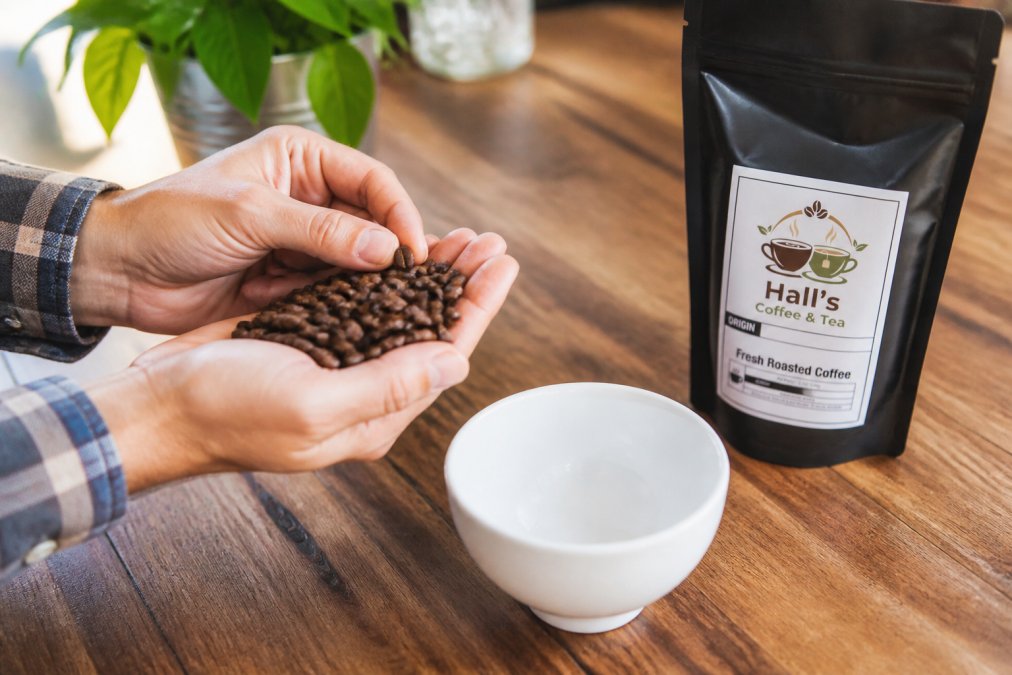
Color and density matter. High-quality beans are uniform in color and size, feeling dense because they're grown at altitude where they develop slowly and accumulate more solids. Look for deep, even brown color in roasted beans. Uneven coloring suggests inconsistent roasting or lower-grade material.
Aroma tells you about freshness. Fresh, high-quality beans smell vibrant with fruit, floral, or chocolate notes depending on origin. Stale beans smell flat or musty. Open the bag and smell, the aroma should be strong and complex, not dull.
Check the roast date, not the expiration date. Premium roasters print the roast date on the bag. Coffee peaks 5-14 days after roasting and remains good for 3-4 weeks. If the roast date is more than a month old, the beans are past their prime.
Origin and altitude are indicators. Beans grown above 1,200 meters tend to have more complexity. Look for specific regions: Ethiopian Yirgacheffe, Colombian Geisha, Kenyan AA, Sumatran Mandheling. Single-origin is a quality signal.
Cupping scores matter if you see them. Specialty coffee is rated on a 100-point scale by certified cuppers. Scores above 85 are considered specialty grade. Hall's Coffee & Tea provides tasting profiles for their beans, listing characteristics like "dark chocolate, molasses, brown sugar" because they've cupped and verified them.
Look for processing method. Washed, natural, and honey processes each produce different flavor profiles. If processing method isn't listed, that's a sign the roaster doesn't emphasize quality sourcing.
Best Coffee Beans for Home Brewing: What Actually Matters
The best beans for home brewing depend on your brewing method and flavor preferences, but certain characteristics matter universally.
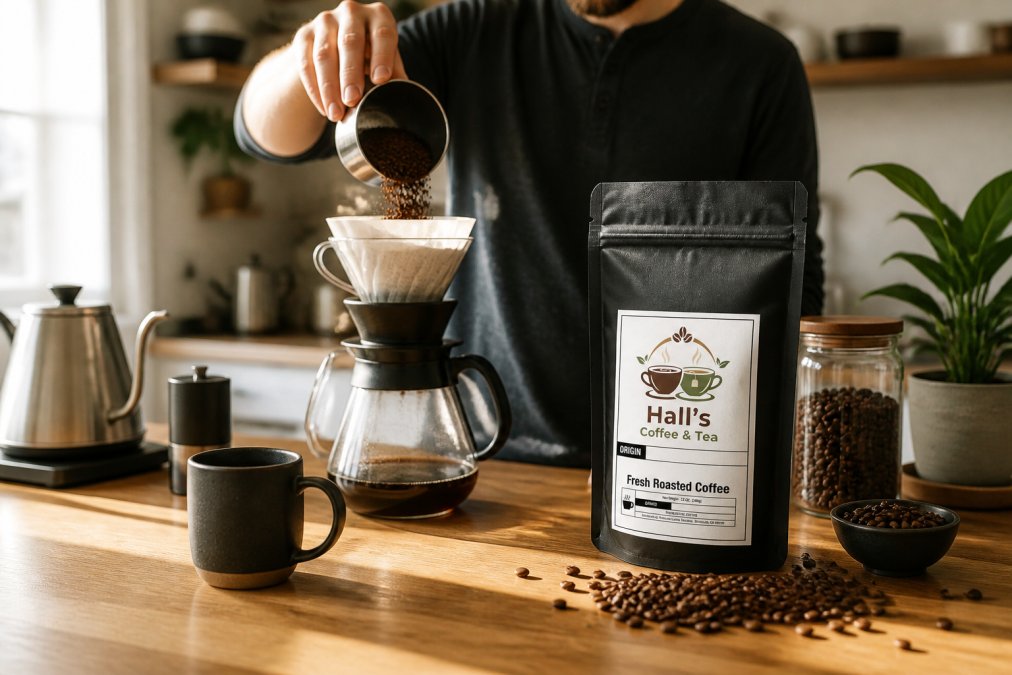
Freshness is non-negotiable. A premium bean roasted 6 weeks ago tastes worse than a mid-range bean roasted 2 weeks ago. Buy beans roasted within 2-4 weeks, store them in an airtight container away from light, and use them within 4 weeks of the roast date.
Bean density affects extraction. High-altitude beans are denser and require slightly longer brew times or finer grinds. A quality burr grinder (not blade) is essential for consistent particle size and even extraction.
Single-origin beans work better for most home brewers than blends. Blends smooth out flavor inconsistencies and hit a middle-ground taste. Single-origin beans have distinct character and provide clearer feedback about your brewing technique. Hall's Coffee & Tea offers single-origins like Peru and Mexico in their Best Sellers Sample Pack.

Medium roasts preserve more origin character than dark roasts. Dark roasts taste similar regardless of origin because the roasting process dominates the flavor. Medium roasts highlight the bean's natural characteristics.
Whole beans beat pre-ground. Ground coffee loses aroma and flavor within days. Whole beans stay fresh for weeks. Many specialty roasters, including Hall's Coffee & Tea, will grind beans to your specifications for free.
Cost-Per-Cup Analysis: Premium vs Standard Coffee
A typical serving uses 0.5 ounces of whole beans (about 14 grams). One pound makes roughly 32 cups.
Premium coffee at $20 per pound = $0.63 per cup (beans only).
Grocery store coffee at $10 per pound = $0.31 per cup (beans only).
The difference is $0.32 per cup. But consider freshness: stale beans require more grounds to extract the same flavor, raising per-cup cost. Fresh premium beans extract efficiently at standard ratios.
Brewing method matters too. A pour-over or French press extracts more flavor from premium beans. An automatic drip machine wastes premium beans due to inconsistent water temperature.
| Scenario | Bean Cost | Brewing Method | Efficiency | Cost Per Cup |
|---|---|---|---|---|
| Premium, fresh | $20/lb | Pour-over | High | $0.63 |
| Premium, fresh | $20/lb | Automatic drip | Medium | $0.79 |
| Standard, stale | $10/lb | Pour-over | Low | $0.47 |
| Standard, stale | $10/lb | Automatic drip | Low | $0.62 |
Fresh premium beans in a pour-over cost less per cup than stale standard beans in automatic drip, despite higher bean cost. For daily drinkers, the $0.32 difference per cup equals $10 monthly, cost-competitive with café visits.
Hall's Coffee & Tea's single-serve capsules ($15 for 12 = $1.25 per capsule) cost more per serving than bulk beans but eliminate waste and guarantee freshness.
The Brewing Skill Factor and Freshness ROI
Brewing skill determines whether premium coffee tastes premium. A $20 bean brewed poorly tastes worse than a $10 bean brewed well.
You need to understand brew ratio, water temperature (195-205°F for most methods), grind size, and contact time (ncausa.org). These variables interact: finer grind needs shorter contact time; hotter water extracts faster.
Most people develop competent technique in 10-15 brews. Watch a video on your brewing method, follow the ratios, and adjust based on taste. Premium beans give immediate feedback, if it tastes sour, your water might be too cool or your grind too coarse.
Freshness ROI is measurable. A bean roasted 2 weeks ago tastes noticeably better than the same bean roasted 6 weeks ago, even with identical brewing technique. Freshness is the single biggest ROI on premium coffee.
Store beans in an airtight container, away from direct sunlight, at room temperature. A sealed bag with a one-way valve preserves freshness better than an open container.
Is Premium Coffee Worth It for Your Routine
Whether premium coffee is worth the cost depends on your routine, preferences, and what "worth it" means to you.
Premium coffee is worth it if:
You drink specialty coffee daily or multiple times per week. The cost difference ($10-15 monthly) is negligible compared to the flavor improvement. You have a quality brewing method like pour-overs, French presses, or espresso machines. You're willing to learn brewing basics, grind size, water temperature, and brew ratio matter. You value the sourcing story: direct trade, fair trade, and sustainable farming add non-flavor value.
Premium coffee might not be worth it if:
You drink coffee casually or inconsistently. The flavor difference matters less when consumed infrequently. You're price-sensitive and coffee is a commodity. You lack a grinder or quality brewing method, premium beans wasted on automatic drip machines don't deliver ROI.
The honest take: Premium coffee is worth it if you drink it regularly, brew it with intention, and enjoy the ritual. It's not worth it if you're buying it to impress others or feel obligated. A person who loves a $10 cup of grocery store coffee has found their answer. A person who notices the difference between origins and roast profiles will find premium coffee worth every penny.
Hall's Coffee & Tea's approach, sourcing from specific farms, roasting to order, providing tasting notes, is designed for people who want more from their coffee. Their Best Sellers Sample Pack ($25) lets you taste multiple origins without committing to full pounds.
For daily drinkers with a quality brewing method, premium coffee is worth the cost. The flavor difference is real, the cost-per-cup is modest, and the ritual elevates your day. Start with freshness, add intention to your brewing, and let the flavor speak for itself.
Frequently Asked Questions
What is the difference between premium coffee and grocery store coffee?
Premium specialty coffee comes from single-origin sources with documented sourcing, higher cupping scores, and careful processing. Grocery store commodity coffee blends beans from multiple origins, often lower-altitude farms, and prioritizes volume over flavor complexity. Premium beans show visible quality differences: uniform size, consistent color, and absence of defects. The flavor difference is immediate, specialty coffee delivers distinct acidity, body, and aroma notes, while commodity coffee tastes flat and one-dimensional. Processing method also differs: premium uses washed, natural, or honey processes; commodity uses whatever maximizes yield.
Does expensive coffee actually taste better, or is it just marketing?
Taste improvement is measurable, not subjective. Premium coffee scored 80+ on the Specialty Coffee Association cupping scale versus 60-70 for commodity coffee. Higher altitude, volcanic soil, and selective harvesting create more complex sugars and acids that develop into recognizable flavors like dark chocolate, citrus, or molasses. That said, brewing skill matters enormously, premium beans brewed incorrectly taste worse than commodity coffee brewed well. The price reflects real differences in sourcing, processing, and freshness, but you must brew properly to experience them.
How can you tell if coffee beans are high quality before buying?
Look for four markers: roast date (within 2-4 weeks), single-origin designation with specific region and altitude, cupping score or tasting notes, and sourcing transparency (fair trade or direct trade certification). High-quality beans are uniform in size and color with no visible defects or chips. Smell the beans if possible, premium coffee has complex, pleasant aroma. Avoid bags with vague labels like 'mountain blend' or no roast date. Check for small-batch roasters who list grower names and processing methods. Hall's Coffee & Tea provides roast profiles, grower information, and altitude for every single-origin option, making it easy to verify quality before purchase.
Is premium coffee worth buying if I'm not a coffee expert?
Yes, if you drink coffee daily. Even casual drinkers notice the difference between stale commodity coffee and fresh premium beans. You don't need special equipment, a basic drip machine or French press works fine. Start with a sample pack to try different origins without committing to full bags. The Best Sellers Sample Pack includes six 2-ounce varieties, letting you discover what you prefer. If you drink two cups daily, premium coffee costs roughly $0.50-0.75 per cup versus $0.25 for grocery store coffee, a $10-15 monthly difference for noticeably better taste and aroma. That's reasonable for a ritual you do twice daily.
This article was written using GrandRanker
