

Best Single Origin Coffee Beans for Pour Over
Table of Contents
- Why Single Origin Beans Shine in Pour Over
-
The Best Single Origin Coffee Beans for Pour Over, Ranked
- 1. Ethiopia Natural: Fruit-Forward and Floral
- 2. Tanzania: Bright and Tea-Like
- 3. Colombia: Balanced and Sweet
- 4. Guatemala: Chocolate and Butterscotch
- 5. Peru: Silky and Citrus-Kissed
- 6. Nicaragua: Cocoa and Floral
- 7. Papua New Guinea: Caramel and Honey
- 8. Bali Blue: Bold and Syrupy
- 9. Sumatra: Earthy and Full-Bodied
- 10. Uganda: Floral and Chocolatey
- Best Roast for Pour Over
- Pour Over Coffee Grind Size Guide
- How to Brew Pour Over Coffee at Home
- Water Chemistry and Freshness: Two Factors Most Brewers Miss
- Conclusion
- Frequently Asked Questions
Last Updated: September 20, 2026
Why Single Origin Beans Shine in Pour Over
Single origin coffee is grown in one specific region, farm, or cooperative rather than blended from multiple sources. That traceability matters in pour over because the brew method exposes every flaw and every strength of a bean. A single origin coffee from Ethiopia tastes like Ethiopia, not like a blend built to hide defects.
This guide from Hall's Coffee & Tea ranks ten standout origins by how well they perform in a pour over setup.
Pour over gives you full control over water temperature, flow rate, and extraction time.
The Best Single Origin Coffee Beans for Pour Over, Ranked
Each origin brings a distinct flavor profile and works best at a specific roast level and grind setting. The ranking weighs clarity, sweetness, and how forgiving each bean is.
| Origin | Roast Level | Key Flavor Notes | Best For |
|---|---|---|---|
| Ethiopia Natural | Medium-light | Milk chocolate, fruit, caramel | Floral and fruit-forward seekers |
| Tanzania | Medium-light | Pear, jasmine, strawberry | Bright, tea-like cups |
| Colombia | Medium | Dried orange, berry, chocolate | Balanced everyday brewing |
| Guatemala | Medium | Dark chocolate, butterscotch | Chocolate lovers |
| Peru | Medium | Salted caramel, citrus | Silky, sweet cups |
| Nicaragua | Medium | Cocoa, floral, citrus | Layered complexity |
| Papua New Guinea | Medium | Caramel, honey, fruit | Honeyed sweetness |
| Bali Blue | Medium-dark | Dark chocolate, molasses | Bold, syrupy body |
| Sumatra | Medium-dark | Earthy, dark chocolate, dried fruit | Full-bodied, low-acid cups |
| Uganda | Medium | Floral, chocolate, dark fruit | Mild, approachable flavor |
1. Ethiopia Natural: Fruit-Forward and Floral
Ethiopia Natural leads this list because the natural process concentrates fruit sugars inside the coffee cherry before drying, producing a cup that tastes like strawberries dipped in milk chocolate.

2. Tanzania: Bright and Tea-Like
Tanzania delivers the cleanest cup on this list: pear, jasmine, and strawberry notes with almost no bitterness, making it a strong choice for pour over beginners.
3. Colombia: Balanced and Sweet
Colombia is the safest pick for daily brewing. Dried orange, berry, and chocolate sit in equal measure, so no single note dominates.
4. Guatemala: Chocolate and Butterscotch
Guatemala brings dark chocolate and butterscotch to the front of the cup, with bright fruit cutting through the finish. Antigua's volcanic loam soil and 1,200 to 1,616 meter elevation give the bean its density.
5. Peru: Silky and Citrus-Kissed
Peru's salted caramel and citrus profile makes it the most dessert-like coffee here. The Norandino cooperative grows Caturra, Bourbon, Catuai, Pache, and Catimor varieties across 1,100 to 1,700 meters.
6. Nicaragua: Cocoa and Floral
Nicaragua layers cocoa, floral, and citrus tones in a way that rewards slower pours. Molino Norte farmers ferment the beans for 12 to 14 hours before patio drying, which builds complexity.
7. Papua New Guinea: Caramel and Honey
Papua New Guinea tastes like caramel and honey with a fruit undertone. Bourbon and Typica varieties from Chimbu Province cooperatives grow at 1,350 meters on volcanic loam.
8. Bali Blue: Bold and Syrupy
Bali Blue is the boldest coffee on this list. Dark chocolate, molasses, and brown sugar notes come from the wet-hulled process used by Kintamani farmers at 1,200 to 1,600 meters. Medium-dark roasting gives this bean a syrupy body that stands up to milk; for black pour over, use a coarser grind to keep the molasses note from turning bitter.
9. Sumatra: Earthy and Full-Bodied
Sumatra splits opinions. The giling basah wet-hulling process produces earthy, dark chocolate, and dried fruit notes with a lingering body no other origin matches.
10. Uganda: Floral and Chocolatey
Uganda closes the list with mild acidity, light body, and floral chocolate notes. The Sipi region's 1,500 to 2,500 meter altitude makes it one of the highest-grown coffees here.
Best Roast for Pour Over
| Roast Level | Water Temperature | Grind Size | Origins That Fit | Why It Works |
|---|---|---|---|---|
| Medium-light | 200-205°F | Medium-fine | Ethiopia, Tanzania | Dense high-grown beans need heat and surface area to extract fully |
| Medium | 200-205°F | Medium | Colombia, Guatemala, Peru, Nicaragua, Papua New Guinea, Uganda | Balanced solubility matches the baseline grind |
| Medium-dark | 195-200°F | Medium-coarse | Bali Blue, Sumatra | Wet-hulled beans are already porous; cooler water and coarser grind prevent over-extraction |
One more trade-off: darker roasts are more consistent bag to bag because the roast profile dominates the flavor, while lighter roasts vary because the origin's terroir shows through, exactly why you bought single origin. For predictability, go medium; to taste the farm, go medium-light.

Pour Over Coffee Grind Size Guide
Grind size is the single biggest variable in pour over brewing: too fine and the water stalls and over-extracts; too coarse and it runs straight through without picking up flavor.
- Ethiopia, Tanzania: medium-fine, because dense high-grown beans resist extraction
- Colombia, Guatemala, Peru, Nicaragua: medium, the baseline setting
- Papua New Guinea, Uganda: medium, leaning slightly coarser
- Bali Blue, Sumatra: medium-coarse, because wet-hulled beans extract quickly
How to Brew Pour Over Coffee at Home
Brewing pour over coffee at home takes about four minutes once your water is ready; technique matters more than equipment.

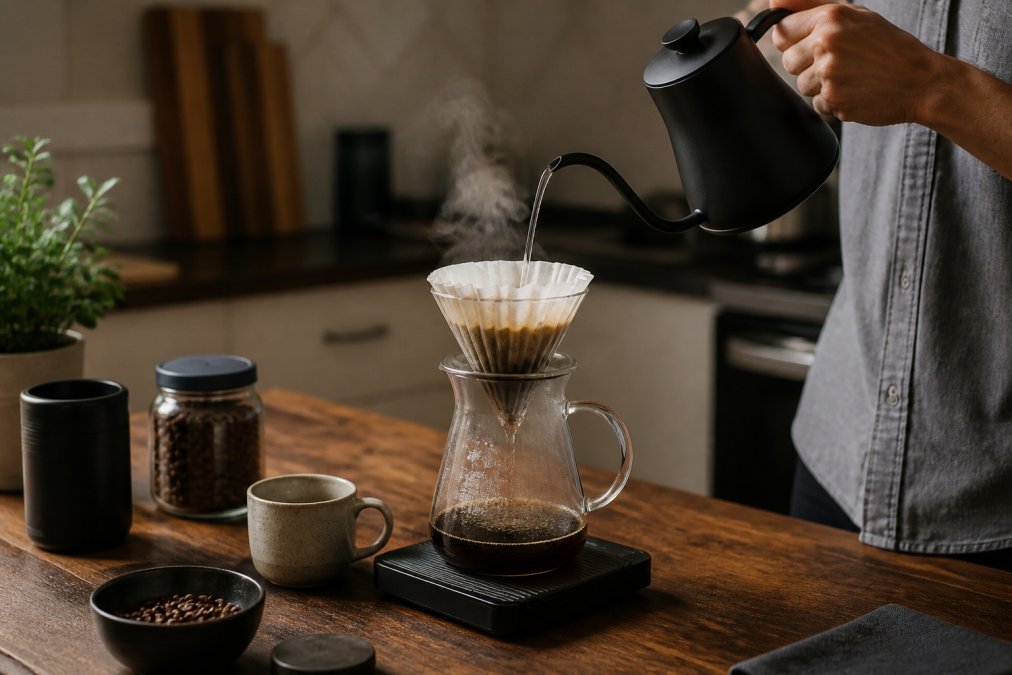
Total Time: 4-5 minutes Difficulty: Beginner
What You'll Need:
- Pour over dripper and paper filter
- Gooseneck kettle
- Burr grinder
- Digital scale
- Timer
- Heat your water to 200°F. Let it sit for 30 seconds after boiling if you don't have a variable-temperature kettle.
- Rinse the paper filter with hot water, then discard the rinse water. This removes paper taste and preheats the dripper.
- Weigh 22 grams of coffee and grind to your origin's setting. Add the grounds to the rinsed filter.
- Bloom the coffee. Pour 50 grams of water over the grounds and wait 30 to 45 seconds. Fresh coffee releases carbon dioxide here, and skipping this step causes uneven extraction.
- Pour in slow circles. Add water in three stages, keeping the bed level. Stop at 350 grams total.
- Let it drain fully. Total brew time should land between 3 and 4 minutes.
Water Chemistry and Freshness: Two Factors Most Brewers Miss
Freshness has a second layer most guides skip: resting. Coffee roasted within the last 24 hours releases too much carbon dioxide during brewing, which pushes water away from the grounds and creates an uneven, gassy cup. Beans need two to seven days of rest after roast before they peak; past three weeks, the flavor notes fade.
Specialty Coffee Association water quality standards
Conclusion
Choosing among the best single origin coffee beans for pour over comes down to matching the origin's flavor profile to what you want in the cup. Ethiopia and Tanzania reward brewers who chase brightness; Sumatra and Bali Blue deliver weight and depth; Colombia and Guatemala sit comfortably in the middle.
Frequently Asked Questions
Which coffee beans are best for pour over?
Medium and medium-light roast single origin beans work best for pour over because they preserve the acidity, floral notes, and fruit-forward flavors that the method highlights. Beans from Ethiopia, Tanzania, and Colombia are top choices. Look for a roast date within two to four weeks and grind fresh before each brew.
Why is single origin coffee preferred for pour over brewing?
Single origin coffee comes from one region, so its flavor notes reflect a specific terroir, altitude, and varietal. Pour over brewing extracts those nuances clearly, giving you a clean cup with distinct sweetness and aftertaste. Blends tend to mute those details, which is why single origin beans are the standard for pour over.
What roast profile is best for pour over coffee?
Medium and medium-light roasts are the sweet spot. They have enough development for sweetness and body without the smoky, bitter notes that darker roasts bring. Light roasts can taste sour if your grind is too coarse or your water is not hot enough, so start with a medium roast and adjust from there.
How does grind size affect the flavor of single origin pour over?
Grind size controls how fast water moves through the coffee. A medium-fine grind, similar to table salt, works for most pour over drippers. Too coarse and the water rushes through, leaving a thin, sour cup. Too fine and it clogs, producing bitterness. Adjust one notch at a time and taste the difference.
How should I store single origin coffee beans to maintain freshness?
Keep beans in an airtight, opaque container at room temperature, away from light, heat, and moisture. Do not store them in the fridge or freezer unless you seal them in a vacuum bag for long-term storage. Buy in amounts you will finish within two to four weeks, and grind right before brewing for the best flavor.
