

Coffee Blooming in Pour Over Explained for Better Brews
Table of Contents
- What Coffee Blooming Actually Does to Your Pour Over
- Why Freshly Roasted Beans Release Carbon Dioxide
- How Long Should Coffee Bloom Duration Be?
- How to Pour Over Coffee Step by Step
- Light vs Dark Roast: Blooming Differences That Change Your Cup
- Common Blooming Mistakes and How to Spot a Failed Bloom
- Frequently Asked Questions
Last Updated: September 21, 2026
What Coffee Blooming Actually Does to Your Pour Over
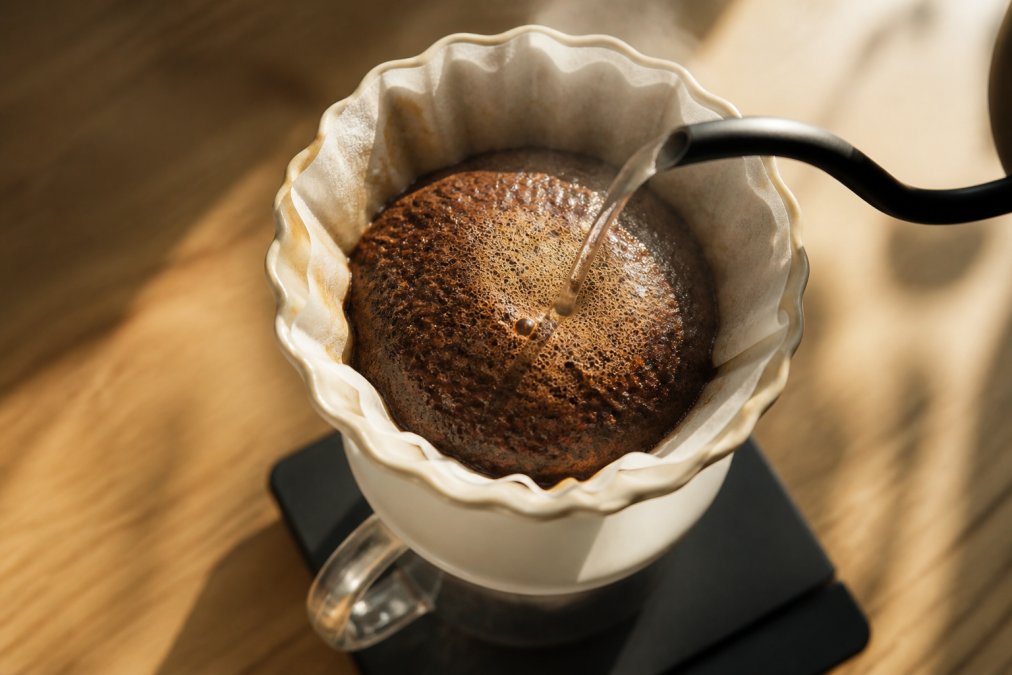
Coffee blooming is the rush of bubbles and foam you see when hot water first hits fresh grounds. That reaction is carbon dioxide escaping the coffee. At Hall's Coffee & Tea, we think of it as the moment your pour over wakes up.
Here's the simple version. Freshly roasted beans trap gas inside. When water touches them, the gas pushes out and pushes water away. If you skip the bloom, that gas fights your pour and leaves you with a weak, uneven cup.
So what does blooming actually do? It releases trapped gas so water can reach the grounds evenly. That sets up better extraction from the very first pour.
A quick bloom also lets you check your beans. Lots of bubbling means fresh coffee. Almost no bubbling usually means the beans sat on a shelf too long.
The whole step takes about 30 seconds. That small pause changes how the rest of your brew tastes.
Why Freshly Roasted Beans Release Carbon Dioxide
Roasting creates carbon dioxide inside every bean. The beans hold onto that gas for days or weeks after roasting. This slow release is called degassing coffee beans.
Grinding speeds it up. Once you grind, the gas escapes much faster because so much surface is exposed. That is why a fresh grind blooms so hard.
Some gas leaves on its own over time. But most of it stays locked in until water or a grinder breaks it free. Your bloom is simply the last big release.
How Roast Date Affects Gaseous Release
A roast date tells you more than a best-by label ever will. Beans roasted within the past week or two still hold plenty of gas, so they bloom with real energy.
Older beans have already let most of that gas go. They barely bubble, and the cup tastes flatter. This is why buying from a roaster who prints the roast date matters.
At Hall's Coffee & Tea, we ship single-origin beans like our Colombia so you know exactly what you are brewing. Fresh beans bloom better, and better blooms brew better coffee.

How Long Should Coffee Bloom Duration Be?
Coffee bloom duration should run about 30 to 45 seconds for most pour over brews. Watch the bubbles. When they slow and the bed settles, the bloom is done.
You do not need a timer to start, though one helps at first. Pour just enough water to wet all the grounds, then wait. If the bed still bubbles hard at 45 seconds, give it a few more.
Most guides hand you that 30-second number and stop. The problem is that 30 seconds is an average, not a rule. The real bloom time is set by how fast carbon dioxide can leave the bed, and that speed depends on three things you control: grind size, water temperature, and how much water you add.
Why Grind Size Changes Bloom Duration
Grind size sets how much surface area the water can reach. A fine grind cracks each bean into many small particles, so there is far more exposed surface for gas to escape from. Gas leaves fast, the crust forms quickly, and the bloom can be finished in 20 to 25 seconds.
A coarse grind does the opposite. Fewer, larger particles mean less exposed surface, so gas trickles out slowly and the bed can keep bubbling past a full minute. If you brew coarse and pull your kettle away at 30 seconds, you are pouring into grounds that are still off-gassing, and that gas will push your water away from the coffee.
A useful habit: match your wait to your grind. Fine grind, shorter bloom. Coarse grind, longer bloom. Medium grind sits in the middle, which is why the standard 30 to 45 seconds works so well for most pour over recipes.
Why Water Temperature Changes Bloom Speed
Thermal energy drives the release of dissolved gas. Warmer water pulls carbon dioxide out of the grounds faster than cooler water, the same way a warm soda goes flat faster than a cold one.
Water near 200°F (93°C) is the common target for pour over, and at that temperature a fresh medium grind typically blooms hard within the first 10 seconds. Drop the water to around 185°F (85°C) and the same coffee will bubble more slowly and may need closer to a minute to settle. Go cooler still and the bloom can look almost dead even with fresh beans.
This is why a stalled bloom is not always a freshness problem.
How Much Bloom Water You Add Matters Too
Bloom water volume is the third lever. A light pour that just wets the grounds leaves some particles dry, and dry particles cannot release gas. A heavy pour drowns the bed and traps gas under standing water, which slows the release instead of speeding it up.
A Simple Way to Dial In Your Bloom Time
Keep everything steady and change one variable at a time:
- Hold grind and water volume constant, then try water at 195°F (91°C) and again at 205°F (96°C). Note which bloom settles faster.
- Hold temperature and water volume constant, then brew once with a fine grind and once with a coarse grind. The fine grind should finish first.
- Once you find a combination where the bed settles in 30 to 45 seconds, write it down. That is your baseline.
Grind Size and Water Temperature Effects
Grind size and water temperature both shape how your bloom behaves. This is the part most guides skip.
How to Pour Over Coffee Step by Step
Here is the full process:
- Heat water to about 200°F (93°C)
- Rinse the filter with hot water, then dump that water
- Add medium-ground coffee to the dripper
- Pour a small circle of water to wet all the grounds
- Wait 30 to 45 seconds for the bloom
- Pour in slow circles, keeping the bed even
- Let it draw down, then serve
Keep your pours gentle. A slow, even stream gives you an even extraction and a cleaner cup.
Light vs Dark Roast: Blooming Differences That Change Your Cup
Light and dark roasts bloom in noticeably different ways. Once you notice it, you can adjust your pour to match.
| Roast Level | Bloom Size | Typical Bloom Time | What to Do |
|---|---|---|---|
| Light | Large, foamy | 40-60 seconds | Wait longer, pour gently |
| Medium | Medium dome | 30-45 seconds | Standard bloom works well |
| Dark | Small, quick | 20-30 seconds | Bloom fast, then pour |
How to Adjust Your Pour for Each Roast
Knowing the difference is only useful if it changes what you do at the kettle.
Freshness Interacts With Roast Level
If you want to taste how roast level changes the bloom, try a light option like our Ethiopia Natural next to a darker roast. The difference in the bed is obvious within one brew.

Common Blooming Mistakes and How to Spot a Failed Bloom
Watch for these problems:
- Skipping the bloom entirely. Gas fights your pour and the cup tastes thin.
- Pouring too fast. The bed floods before gas escapes, causing channeling.
- Using stale beans. Old coffee barely blooms and tastes flat.
- Water that is too cool. The bloom stalls and extraction suffers.
- Grind too fine. The bed clogs and the draw down drags on.
A flat bloom is not a disaster. It just tells you something. Fix the cause and the next cup improves.
Frequently Asked Questions
What is the point of blooming coffee?
Blooming releases trapped carbon dioxide from freshly roasted grounds so water can extract flavor evenly. Without it, gas repels water and causes channeling, leaving you with sour, weak, or uneven cups. A proper bloom also pre-wets the grounds for consistent saturation and better aroma release.
How much water should I use for the coffee bloom?
Use roughly twice the weight of your coffee grounds. For a 20-gram dose, pour about 40 grams of water. This saturates all the grounds without starting full extraction. If you see dry patches, add a few more grams and give the dripper a gentle swirl to ensure even pre-wetting.
What happens if you bloom coffee too long?
Blooming too long lets the coffee bed cool, which lowers extraction temperature and can produce a flat, under-extracted cup. Most pour over recipes call for 30 to 45 seconds. If you wait several minutes, the slurry drops in temperature and the brew time extends, often adding bitterness from over-extraction later in the pour.
Does blooming coffee make it taste better?
Yes, when done correctly. Blooming allows carbon dioxide to escape, so the water that follows can dissolve sugars, acids, and volatile compounds evenly. The result is a clearer flavor profile with balanced acidity and sweetness. Skipping the bloom often leaves coffee tasting sharp or hollow because extraction happens unevenly across the coffee bed.
Blooming is a 30-second pause that separates a flat cup from a rich one. It rewards fresh beans and a little patience. Hall's Coffee & Tea makes that easy with single-origin beans shipped straight to your door, free US shipping, and secure checkout. Start with a fresh roast, bloom it well, and taste the difference. SHOP COFFEE and brew your best cup yet.
