

Keep Coffee Beans Fresh During Shipping: A Step-by-Step Guide
Table of Contents
- Why Shipping Poses Unique Challenges for Coffee Freshness
- Best Coffee Packaging for Freshness During Transit
- Coffee Degassing Valves Explained: What They Do and Why They Matter
- How Long Does Roasted Coffee Stay Fresh After Shipping
- Step-by-Step: Preparing Coffee for Safe Shipment
- What to Do When Your Shipped Coffee Arrives
- Common Shipping Mistakes That Ruin Coffee Freshness
- Conclusion
Last Updated: August 28, 2026
Why Shipping Poses Unique Challenges for Coffee Freshness
Shipping coffee beans exposes them to conditions that accelerate degradation: temperature fluctuations, pressure changes, humidity shifts, and prolonged oxygen exposure. A package might swing from a hot delivery vehicle to a cool warehouse to an unheated cargo hold, stressing the beans with thermal shock that damages delicate oils and aromatics. Moisture seeps through inadequate seals, and oxygen infiltrates packaging not designed for transit, leaving beans stale and flat.
At Hall's Coffee & Tea, we understand that preventing freshness loss during shipping requires packaging engineered for transit. You need to understand how degassing valves work, what happens to coffee during the shipping window, and how to extend freshness once it arrives. This guide walks you through exactly how to keep coffee beans fresh during shipping, whether you're ordering premium single-origin beans or preparing roasted coffee for customer delivery.
Best Coffee Packaging for Freshness During Transit
The best coffee packaging combines three critical elements: an airtight container, a one-way degassing valve, and opaque materials that block light. Standard kraft paper bags aren't enough; they allow slow oxygen infiltration and offer no protection against moisture or light.
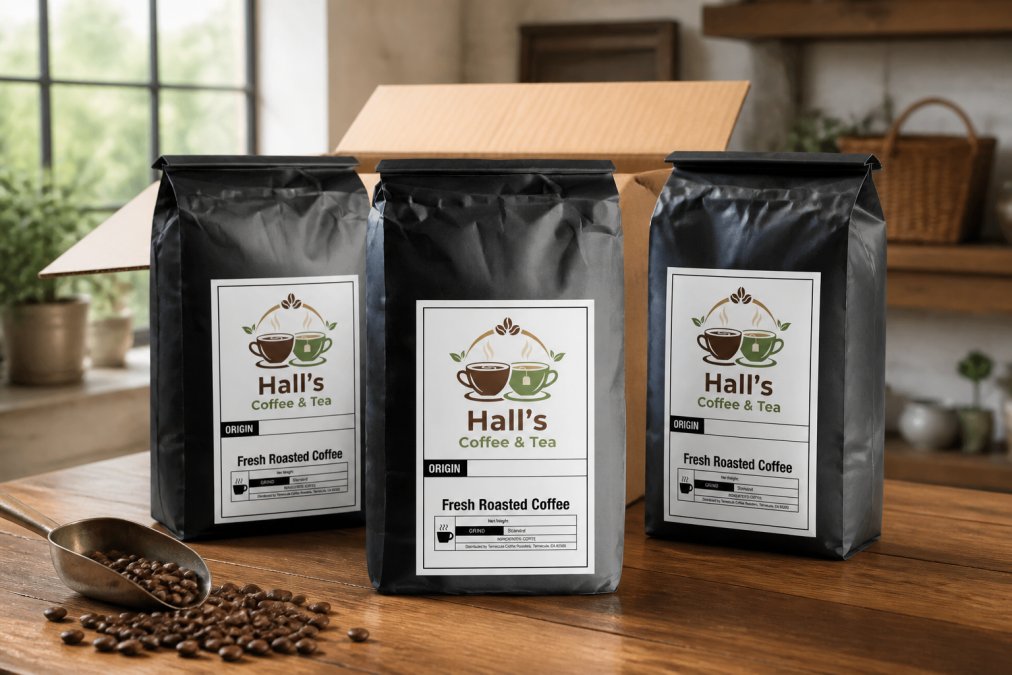
A proper shipping bag must be thick enough to resist punctures, with a strong seal that maintains integrity through temperature and pressure changes. A one-way valve allows CO2 to escape without letting oxygen back in, critical because freshly roasted beans release gas for days after roasting. Without this valve, pressure builds and forces the seal open.
Vacuum sealing adds another layer of protection by removing oxygen before sealing. However, vacuum sealing immediately after roasting isn't ideal because beans need to degas. The solution: use a bag with a degassing valve, allow gas escape for 24-48 hours, then vacuum seal for shipment.
Opaque packaging is essential. Light accelerates degradation of the oils and compounds that create flavor. During shipping, a package might sit in bright conditions for hours. Opaque kraft paper or metallized film protects the beans from this exposure.
For shipments, avoid plastic bags without degassing valves, thin foil liners, and clear or translucent materials. The investment in proper packaging is minimal compared to beans arriving stale. If ordering from a roaster, check whether their shipping bags have a one-way valve, it signals they understand the challenge of keeping coffee fresh during shipping.
Coffee Degassing Valves Explained: What They Do and Why They Matter
A degassing valve is a one-way membrane that allows carbon dioxide to escape while preventing oxygen from entering. Freshly roasted coffee releases significant CO2 for 24-72 hours after roasting (peer-reviewed research). Without a way for this gas to escape, pressure builds inside a sealed bag until the seal opens, allowing oxygen to flood in and stale the beans.
The valve typically contains a rubber or silicone membrane that opens when internal pressure exceeds external pressure, letting gas out. When external pressure is higher, the membrane seals shut, preventing oxygen from entering.
Why does this matter for shipping? A sealed bag without a valve sent immediately after roasting will eventually burst or leak, exposing beans to oxygen for days. A bag with a properly functioning valve allows coffee to degas naturally while staying protected. By arrival, most CO2 has escaped, internal pressure is stable, and oxygen exposure has been minimal.
Not all valves are equal. A cheap valve might not seal completely, allowing slow oxygen infiltration. A quality valve from a reputable supplier opens and closes reliably across the temperature and pressure ranges a package experiences. A valve is a sign the roaster has invested in protecting the product.
One common mistake: assuming a valve means you don't need to worry about oxygen. The valve prevents catastrophic oxygen entry, but it's not a perfect seal. Over weeks, some oxygen will slowly diffuse through the valve and bag material. This is why properly packaged coffee has a freshness window of typically 2-4 weeks from roasting for optimal flavor.
How Long Does Roasted Coffee Stay Fresh After Shipping
Roasted coffee stays at peak flavor for roughly 2-4 weeks from the roast date, assuming proper packaging and storage (peer-reviewed research). Shipping compresses this timeline because transit introduces uncontrollable variables.
The roast date matters more than the ship date. A bag roasted 5 days ago and shipped today is fresher than a bag roasted 2 weeks ago. When you receive coffee, check the roast date on the bag. If it's more than 3 weeks old, the beans are past their peak, though still drinkable.
Shipping exposes beans to temperature swings, pressure changes, and whatever oxygen infiltrated the packaging. Proper packaging minimizes this, but it does accelerate the clock. Beans that might stay optimal for 4 weeks in an ideal home pantry might only stay optimal for 3 weeks after a cross-country shipment.
Once the package arrives, store beans in an airtight container in a cool, dark place, a pantry away from heat sources is ideal. Avoid the freezer for whole beans you plan to use within 2-3 weeks; temperature shock and condensation risk aren't worth the minimal benefit.
Ground coffee has a shorter freshness window than whole beans, typically 1-2 weeks from grinding (peer-reviewed research). If you order ground coffee, use it quickly.
Step-by-Step: Preparing Coffee for Safe Shipment
If you're roasting coffee and shipping it to customers, follow this process to maximize freshness during transit.
Step 1: Choose Your Airtight Container
Start with bags designed specifically for coffee shipping. Look for multi-layer construction: outer kraft paper for durability, inner foil or metallized film to block light and moisture, and a heat-sealable layer inside. The bag should have a one-way degassing valve already installed.
Ensure bags are at least 3-4 mil thickness. Thinner bags tear during handling. The valve should be from a reputable manufacturer. For very small quantities, use glass jars with airtight seals, which block light completely and provide a perfect oxygen barrier, though they're heavier and more fragile for long-distance shipping.
Step 2: Seal Out Oxygen and Moisture
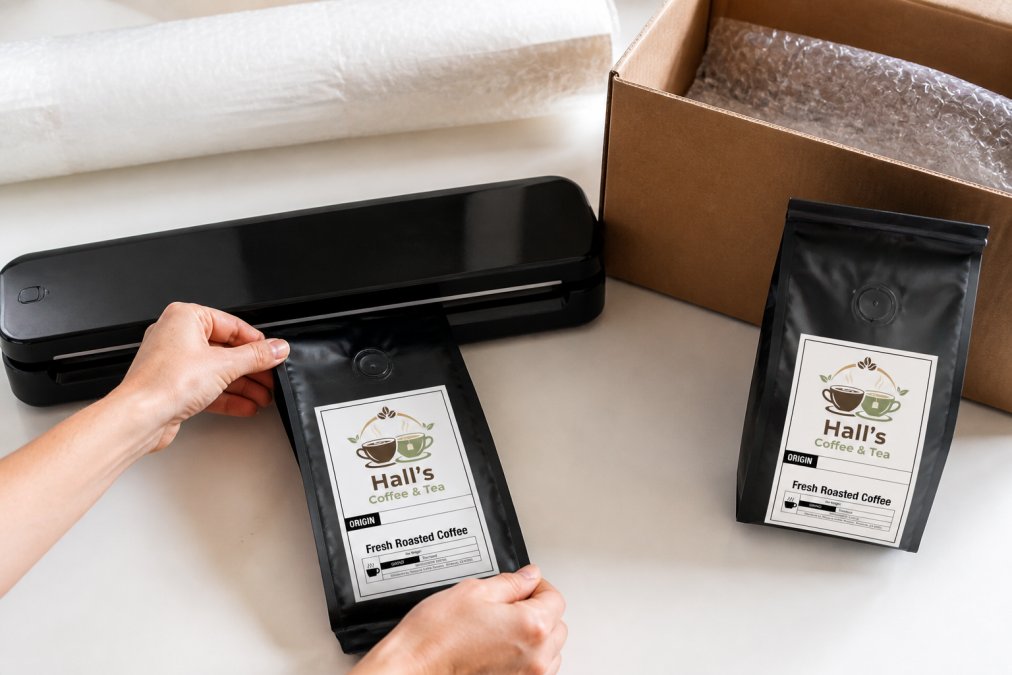
After roasting, let beans degas for 24-48 hours in a loosely sealed container. This allows CO2 to escape without letting oxygen flood in. Once degassing is complete, seal the bag or container as tightly as possible. If using a vacuum sealer, remove as much air as possible without crushing the beans.
For bags with heat-sealable closures, seal them with a heat sealer or clothes iron on low heat. Make sure the seal is complete with no gaps.
Step 3: Protect from Temperature Swings and Light
Wrap the sealed bag in opaque material if it isn't already. If using clear glass jars, wrap them in kraft paper or place them in an opaque box. Consider temperature protection for long-distance shipments, especially during summer. Insulated packaging adds cost but protects the beans, particularly for cross-country shipments.
For winter shipments, insulation also helps prevent condensation when a cold package enters a warm environment.
Step 4: Pack for the Journey
Place the sealed coffee bag inside a shipping box with cushioning material. Use bubble wrap, kraft paper, or air pillows, not packing peanuts, which can shift. The coffee should not move inside the box. Fill any empty space to prevent shifting during transit.
Include a label indicating "Fragile" and "Keep Cool" if appropriate. Add a freshness indicator or roast date label on the outside so customers immediately see when the coffee was roasted.
What to Do When Your Shipped Coffee Arrives
When your package arrives, open it immediately and inspect the bag or container for damage, tears, leaks, or loose seals. If damaged, the beans have been exposed to oxygen; use them sooner rather than later.
Transfer the coffee to an airtight container if it isn't already in one. A glass jar with an airtight seal or a specialized coffee canister with a one-way valve provides better long-term protection than a shipping bag.
Store the container in a cool, dark place. A kitchen pantry away from the stove is ideal. Room temperature (around 68-72°F) is perfect. Avoid the refrigerator unless you live in an exceptionally hot climate.
Don't open the container more than necessary. Each opening introduces oxygen. Check the roast date on the bag. If it's more than 4 weeks old, the beans are past peak flavor. For optimal flavor, use beans within 2-3 weeks of the roast date.
Common Shipping Mistakes That Ruin Coffee Freshness
Using bags without degassing valves. A sealed bag without a valve will eventually burst or leak as CO2 accumulates. Always verify that shipping bags have a one-way valve.
Sealing bags immediately after roasting. Pressure builds too quickly. Wait 24-48 hours before sealing, or use a bag with a valve that allows gas to escape.
Vacuum sealing without allowing initial degassing. This can trap CO2 and create pressure that damages beans or forces the seal open. Let beans degas first, then vacuum seal.
Using thin or low-quality bags. Cheap bags tear easily during handling. Invest in bags that are at least 3-4 mil thick with quality seals and valves.
Shipping in clear or translucent packaging. Light exposure during transit accelerates degradation. Use opaque materials exclusively.
Neglecting to protect against temperature swings. Insulation adds cost but protects the product, especially for premium beans.
Not including a roast date. Customers can't assess freshness without knowing when beans were roasted. Always include the roast date on the package.
Assuming the job is done once the package ships. Include storage instructions with every shipment. Tell customers to transfer beans to an airtight container and store in a cool, dark place.
Keeping coffee beans fresh during shipping is a multi-step process that starts with the right packaging and continues through how customers store the product at home. The investment in proper bags with degassing valves, opaque materials, and careful sealing pays dividends in customer satisfaction.
At Hall's Coffee & Tea, we are committed to protecting freshness across the journey to your door. Our Instant Coffee offers a convenient alternative when you need coffee quickly, but for those seeking the full ritual of freshly roasted beans, proper shipping protection is essential. When your coffee arrives, transfer it to an airtight container and store it in a cool, dark place. You'll taste the difference that careful handling makes in every cup.

Frequently Asked Questions
How long do coffee beans stay fresh after being shipped?
Roasted coffee beans typically stay fresh for 2-4 weeks after shipping if stored properly in an airtight container away from heat and light. Peak flavor window is usually 1-2 weeks post-arrival. The freshness window depends on the roast date, packaging quality during transit, and your storage environment after delivery. Check the roast date on your package to track freshness accurately.
Can I vacuum seal coffee beans to keep them fresh during shipping?
Yes, vacuum sealing is one of the methods for keeping coffee beans fresh during shipping. It removes oxygen exposure and creates an airtight seal that prevents oxidation and moisture absorption. However, vacuum-sealed bags without a degassing valve can trap CO2 released by fresh beans, potentially causing the bag to burst. Look for vacuum-sealed options with a one-way degassing valve for optimal protection during transit and storage.
What's the difference between whole bean and ground coffee for shipping freshness?
Whole bean coffee stays fresh significantly longer during shipping because it has less surface area exposed to oxygen. Ground coffee oxidizes much faster due to increased surface exposure, typically losing peak flavor within 1-2 weeks of shipping. If you need coffee shipped, whole beans are the better choice for maintaining freshness throughout transit and storage. Grind your beans at home just before brewing for maximum flavor.
Does shipping temperature affect how fresh my coffee beans stay?
Yes, temperature fluctuations during shipping can degrade coffee quality. Thermal shock, rapid temperature changes, can cause condensation inside packages, introducing unwanted moisture that accelerates staling and bean degradation. Ideal shipping temperatures stay between 50-70°F. Excessive heat speeds up oxidation, while extreme cold can affect flavor compounds. Store your beans in a cool, dark place immediately upon arrival.
This article was written using GrandRanker
