

How to Choose Specialty Coffee Beans: A 2026 Guide
Table of Contents
- Start With Your Preferred Brew Method
- Specialty Coffee Roast Levels Explained
- Single-Origin vs. Blends: What's the Difference?
- How to Read Coffee Bean Labels for Freshness and Quality
- Understanding Processing Methods and Their Taste Impact
- Finding the Best Coffee Beans for Home Brewing on a Budget
- Common Mistakes to Avoid When Buying Specialty Coffee
- Your Next Steps to a Better Cup
- Frequently Asked Questions
Last Updated: September 7, 2026
Choosing specialty coffee beans comes down to one question: how do you brew them? That decision determines the roast level, origin, and processing method you should buy. This guide from Hall's Coffee & Tea covers roast profiles, label reading, processing methods, and budget-friendly sourcing so your next bag delivers a noticeably better cup.
Most beginner guides focus on roast color alone, but the real difference between a good purchase and a disappointing one comes from matching the bean's characteristics to your brewing equipment and taste preferences. Specialty coffee beans are graded at 80 points or higher on the Specialty Coffee Association's 100-point scale, meaning they're grown at altitude, harvested ripe, and processed with care (sca.coffee).
Start With Your Preferred Brew Method
Your brewer dictates which specialty coffee beans you should buy. Espresso machines need dense beans roasted medium-dark to balance pressure extraction, while pour-over methods reward lighter roasts with pronounced acidity and floral notes. French press and cold brew tolerate darker roasts because their full-immersion brewing handles heavier body and lower acidity well.
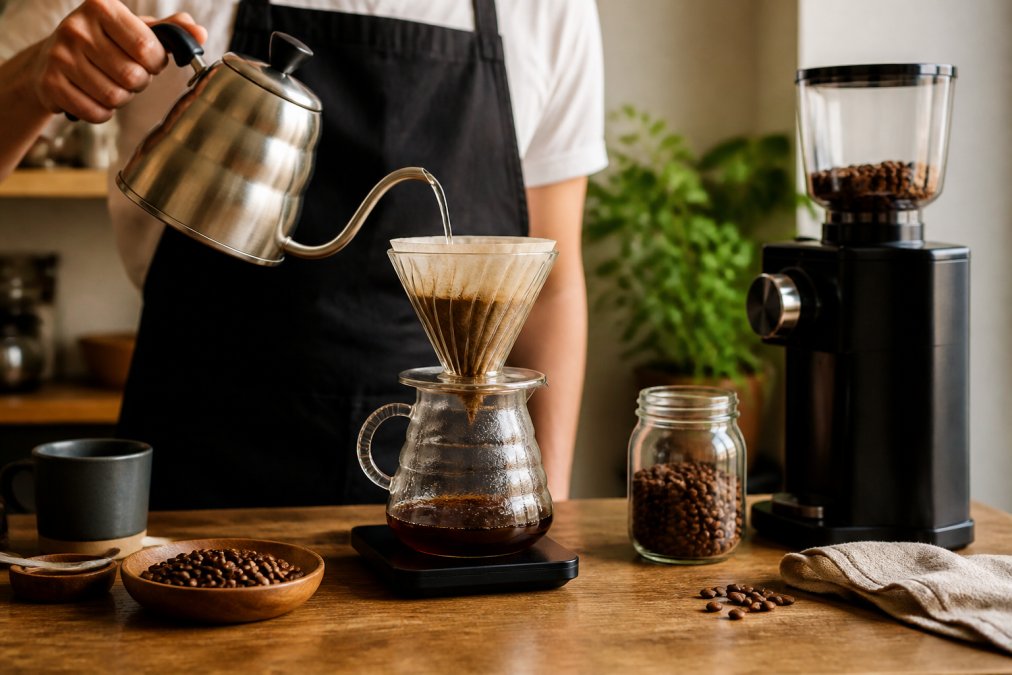
Match your grind size to your brew time. Coarse grinds suit French press and cold brew with their 4-to-12-minute steeps. Medium grinds work for drip machines. Fine grinds are essential for espresso, where water contacts the grounds for only 25 to 30 seconds.
Specialty Coffee Roast Levels Explained
Specialty coffee roast levels range from light to dark, and each stage transforms the bean's natural characteristics differently. Light roasts preserve origin flavors like fruit, floral notes, and bright acidity. Medium roasts balance acidity with caramelized sweetness and chocolate notes. Dark roasts emphasize bold, smoky body while diminishing the bean's origin character.
The roast date matters more than the roast level for most home brewers. Coffee reaches peak flavor 4 to 14 days after roasting, when degassing releases trapped carbon dioxide. During this window, the beans bloom properly and extract evenly. Buying beans without a roast date is a gamble you shouldn't take.
| Roast Level | Best Brew Methods | Flavor Profile | Ideal For |
|---|---|---|---|
| Light | Pour-over, drip | Floral, fruity, bright | Flavor explorers |
| Medium | Drip, French press | Balanced, chocolate, caramel | Daily drinkers |
| Dark | Espresso, cold brew | Bold, smoky, low acidity | Milk-based drinks |
Single-Origin vs. Blends: What's the Difference?
Single-origin coffee comes from one farm, cooperative, or region, offering a distinct flavor profile shaped by that location's altitude, soil, and climate. Blends combine beans from multiple origins to create a consistent, balanced cup. Neither is inherently superior; they serve different purposes.
Single-origin beans showcase terroir and processing skill, making them ideal for pour-over brewing where flavor clarity shines. Blends excel in espresso and milk drinks because roasters craft them for balance and reliability. If you're curious about exploring different origins, a sample pack lets you taste several regions without committing to a full bag.

How to Read Coffee Bean Labels for Freshness and Quality
How to read coffee bean labels starts with finding the roast date, not just a "best by" date. Specialty roasters print the roast date because freshness directly impacts flavor. Beans purchased 2 to 4 weeks after roasting have passed their peak and will taste flat.
Beyond the roast date, look for these label elements: origin country and region, processing method, varietal, and altitude. Transparent roasters share this information because it demonstrates quality and traceability. The Specialty Coffee Association's labeling standards encourage this transparency, helping consumers make informed purchases.
Specialty Coffee Association freshness guidelines emphasize that roasted coffee is a perishable product with a limited flavor window. A label listing "Arabica" without origin details tells you little about quality. Seek out specific farm or cooperative names, which indicate direct relationships between roaster and grower.
Understanding Processing Methods and Their Taste Impact
Processing method shapes a coffee's flavor as much as its origin, but most guides stop at 'washed is clean, natural is fruity.' Here's what's really happening inside the bean and how to use that knowledge when you buy.
The washed process removes the cherry's fruit flesh within hours of harvest, then ferments the beans in water for 12 to 36 hours to break down remaining mucilage. Because the bean dries without fruit contact, the final cup is transparent, you taste the variety and soil, not the processing. This makes washed coffees the best training tool for learning to identify origin characteristics.
The natural process skips fermentation entirely. Ripe cherries dry whole on raised beds or patios for 2 to 4 weeks, during which sugars and enzymes from the fruit migrate into the bean, that's why naturals taste like blueberry, strawberry, or tropical fruit. The trade-off is inconsistency: naturals require meticulous sorting to remove defective cherries, which is why cheap naturals taste 'fermenty' or winey in a bad way.
The honey process (called miel in Costa Rica) leaves a controlled amount of mucilage on the bean during drying. Yellow honey retains about 25%, red honey about 50%, and black honey nearly 100%. This spectrum explains why a yellow honey from Costa Rica's Tarrazú region tastes closer to a washed coffee, while a black honey from the same farm drinks almost like a natural. When you see 'honey' on a label, check the color descriptor, it tells you how much fruit character to expect.
A newer method gaining traction is anaerobic fermentation, where whole cherries ferment in sealed, oxygen-free tanks for 48 to 120 hours. This technique produces intense, sometimes polarizing flavors, think overripe fruit, spice, or even savory umami notes. Anaerobic coffees from Colombia's Huila region have won multiple Cup of Excellence awards since 2018, but they're not for everyone, try them as an occasional adventure, not your daily driver.

Here's how to apply this at the point of purchase:
| Processing Method | Flavor Signature | Best For | Risk Factor |
|---|---|---|---|
| Washed | Clean, bright, tea-like | Learning origin character | Low, consistent quality |
| Natural | Heavy body, berry, chocolate | Espresso and cold brew | Medium, needs careful sorting |
| Honey (yellow) | Balanced, subtle sweetness | Pour-over | Low-Medium |
| Honey (red/black) | Syrupy, fruit-forward | French press | Medium |
| Anaerobic | Intense, experimental | Adventurous palates | High, polarizing flavors |
When a roaster lists the processing method on the bag, they're telling you how much intervention shaped the flavor. A washed coffee from a high-altitude farm in Guatemala will taste like the farm; a natural from that same farm will taste like the farm plus the fruit that surrounded it. Neither is better, but knowing which you prefer will save you from buying bags that don't match your palate.
Finding the Best Coffee Beans for Home Brewing on a Budget
The best coffee beans for home brewing don't require spending $30 per bag. Sample packs offer an affordable entry point, letting you taste multiple origins for the price of one full-size bag. Hall's Coffee & Tea offers a Single Origin Favorites Sample Pack with six 2-ounce portions of different origins for $25.00, allowing you to compare profiles before committing to a larger purchase.
Buying whole beans and grinding at home saves money while preserving freshness. Pre-ground coffee loses volatile aromatics within hours, while whole beans stay fresh for weeks when stored properly. A simple airtight container in a cool, dark place extends your beans' life without special equipment.
Common Mistakes to Avoid When Buying Specialty Coffee
Even with a fresh roast date, you can ruin a $25 bag of beans in your kitchen without realizing it. Here are the mistakes that matter most, including the one nearly every guide overlooks.
Mistake #1: Ignoring your water's mineral content. Coffee is 98% water, yet almost no beginner guide discusses what's in it. The Specialty Coffee Association's Water Quality Handbook identifies ideal ranges for extraction: 150 ppm total dissolved solids, with 40-75 ppm calcium hardness and 40-75 ppm alkalinity as bicarbonate. New York City water measures around 50 ppm, soft enough to produce flat, under-extracted coffee. Los Angeles water often exceeds 300 ppm, which over-extracts and brings out bitter, chalky notes. If your coffee tastes sour, your water may lack the calcium needed to pull sweetness from the bean. A simple fix: use bottled spring water with a mineral analysis label showing 100-200 ppm, or install a basic carbon filter that removes chlorine without stripping minerals. Distilled or reverse-osmosis water is worse than tap, it extracts almost nothing from the bean.
Mistake #2: Buying beans without a roast date. Specialty roasters print the roast date on the bag; grocery store 'specialty' brands often don't. If there's no date, assume the coffee is stale. Beans peak 4 to 14 days after roasting and decline noticeably after 3 weeks.
Mistake #3: Grinding too far in advance. Ground coffee loses about 60% of its aromatic compounds within 15 minutes of grinding. Pre-ground bags have already lost most of what makes specialty coffee special. Grind whole beans immediately before brewing, a $40 burr grinder will outperform a $400 espresso machine paired with pre-ground coffee.
Mistake #4: Overlooking bean density and altitude. High-altitude beans, grown above 1,500 meters, develop slowly, producing complex sugars and acids that shine with light roasting. Low-altitude beans lack this complexity, tasting flat regardless of roast level. Look for altitude on the label; if it's not listed, ask the roaster. A washed Colombian from 1,800 meters will have more perceived sweetness and acidity than the same variety grown at 900 meters.
Mistake #5: Storing coffee in the refrigerator or freezer. The refrigerator is the worst place for coffee, it absorbs odors and introduces humidity. Freezing works only for long-term storage (over a month) in an airtight, vacuum-sealed container, and you must grind from frozen without thawing. For daily use, keep beans in an opaque, airtight container at room temperature, away from sunlight and heat.
Mistake #6: Chasing 'single-origin' without checking the farm. A bag labeled 'single-origin Ethiopia' could contain beans from hundreds of smallholder farms mixed at a washing station. That's not inherently bad, it can be excellent, but it's not the same as a single-farm lot. Look for specific farm or cooperative names, which usually indicate a direct relationship, better quality control, and fairer farmer compensation.
The fix for most of these mistakes costs nothing: buy whole beans with a visible roast date, grind right before brewing, store in an airtight container at room temperature, and pay attention to your water. That combination will improve your cup more than spending an extra $10 per bag.
Your Next Steps to a Better Cup
Choosing specialty coffee beans becomes manageable when you break it into steps: identify your brew method, select a roast level, verify freshness, and explore processing styles. Start with a sample pack to discover your preferences without overspending.
The National Coffee Association's brewing guides offer solid starting points for technique refinement. Once you've identified your preferred flavor profile, you can confidently purchase full bags knowing they'll deliver the experience you want.
At Hall's Coffee & Tea, we source single-origin beans with transparent labeling, including grower, region, altitude, and processing method on every bag. Our Colombia offers dried orange and berry notes at a medium roast, while the Ethiopia Natural delivers milk chocolate and fruity sweetness from high-altitude heirloom cultivars. Both arrive freshly roasted and ready to brew.

Choosing the right beans transforms your daily cup from a caffeine delivery system into a genuine moment of pause. Start with your brewing method, learn to read labels for freshness, and explore single-origin coffees to discover what excites your palate. Hall's Coffee & Tea delivers freshly roasted, transparently sourced beans with free US shipping, secure payments, and expertly crafted selections designed for enthusiasts who value quality. SHOP COFFEE and find your next favorite origin.
Frequently Asked Questions
What defines specialty coffee beans compared to commercial grade?
Specialty coffee beans score 80 points or higher on the Specialty Coffee Association's 100-point cupping scale. This grading reflects beans grown at high altitudes, picked at peak ripeness, and processed with care. Commercial-grade beans, often used in mass-market products, typically score below 80 and may have visible defects. When choosing specialty coffee beans, look for roasters who share the coffee's origin and processing details, which signals a commitment to quality that you can taste in the cup.
How does roast level affect the flavor profile of specialty coffee?
Roast level is the primary driver of flavor. Light roasts preserve the bean's origin characteristics, offering bright acidity, floral notes, and complex sweetness. Medium roasts balance acidity with body, often bringing out chocolate and caramel flavors. Dark roasts feature bold, smoky, and bitter notes with lower perceived acidity. The best coffee beans for home brewing depend on your preference. If you enjoy sweet, fruity cups, try a light or medium roast like our Colombia. For a deeper, richer taste, a dark roast blend works well.
Why is the roast date important when buying specialty coffee?
Coffee is a perishable product. The roast date tells you how fresh the beans are, which is more important than a 'best by' date. Roasted coffee needs time to degas, releasing carbon dioxide, so it's best between 4 and 14 days after roasting. After that, the flavors fade. Specialty coffee roasters should print the roast date on the bag. If you only see a 'best by' date, the beans are likely already stale. This is a key element of learning how to read coffee bean labels.
What is the difference between washed and natural processed coffee?
The processing method shapes the coffee's flavor profile. Washed process coffees have the fruit removed before drying, yielding a clean, bright cup with pronounced acidity and clarity of flavor. Our Colombia, which is fully washed, exemplifies this with its dried orange and chocolate notes. Natural process coffees are dried with the fruit intact, absorbing sugars that create heavier body, lower acidity, and intense fruity flavors. Our Ethiopia Natural, a full natural process, delivers milk chocolate and fruity caramel notes. Both are excellent, but they offer different taste experiences.
How many ounces are in the Single Origin Favorites Sample Pack?
The Single Origin Favorites Sample Pack includes six 2-ounce packs of our most popular single-origin coffees, giving you 12 ounces of coffee total. This format is ideal for exploring different regions and processing methods without committing to a full bag. You can try our Brazil Santos, Colombia, Ethiopia Natural, and Guatemala, among others. It's a low-cost way to discover your preferred flavor profiles before buying larger quantities, making it a smart first step in choosing specialty coffee beans.
What should I look for on a coffee bag label to ensure quality?
When learning how to read coffee bean labels, look for four key pieces of information. First, the roast date, not just a best-by date. Second, the origin, which should be specific, like a region or farm, not just a country. Third, the variety and processing method, as these directly affect taste. Finally, tasting notes offer a guide to the expected flavor profile. A roaster that provides this level of detail, like Hall's Coffee & Tea, demonstrates transparency and a commitment to quality you can trust.
