

Best Coffee Subscriptions for Home Baristas
Table of Contents
- Quick Comparison: Top Coffee Subscriptions for Home Baristas
- How We Evaluated Coffee Subscriptions
- Best Sellers Sample Pack: Versatility Across Roast Profiles
- Single Origin Favorites Sample Pack: For Curated Selection Explorers
- Best Coffee Beans for Espresso Machines: Blends Built for Extraction
- How to Store Coffee Beans for Freshness and Peak Flavor
- Roast Date vs Best by Date: What Actually Matters for Your Brew
- Cost Per Cup and Subscription Fatigue: Making the Numbers Work
Last Updated: August 27, 2026
Quick Comparison: Top Coffee Subscriptions for Home Baristas
When you're serious about your morning brew, a generic bag from the grocery store doesn't cut it. The best coffee subscriptions for home baristas deliver freshly roasted beans calibrated to your specific brew method, with roast dates you can trust and flavor profiles that reward your technique.
What separates a subscription you keep from one you cancel? Freshness guarantees, flexibility in frequency, and beans selected for how you brew. A subscription built for espresso machines demands different bean characteristics than one optimized for pour-over.
This guide from Hall's Coffee & Tea covers subscriptions that deliver on those promises. We've evaluated each option against what home baristas actually need: roast-to-order freshness, curated single-origin selections, and the ability to switch your subscription cadence without friction.
| Subscription Type | Best For | Starting Price | Key Feature |
|---|---|---|---|
| Versatile Sample Packs | Explorers testing roast profiles | $25.00 | Multiple roasts in one order |
| Single-Origin Focused | Curated selection enthusiasts | $25.00 | Direct trade, specific origins |
| Espresso-Optimized Blends | Espresso machine owners | $18.99 | Extraction-ready profiles |
| Storage & Freshness | Long-term quality focus | Included | Roast date tracking |
How We Evaluated Coffee Subscriptions
We tested each option across five dimensions: freshness guarantee (how quickly beans ship after roasting), roast date transparency, customization of subscription frequency, flavor profile consistency, and performance in different brew methods.
Freshness matters because coffee degasses after roasting. A bean roasted two weeks ago tastes different from one roasted five days ago. We tracked roast dates on every order and brewed samples using identical grind size, water temperature, and brew time. For espresso, we pulled shots on the same machine and dialed in each bean separately.
We evaluated whether each service lets you pause, skip, or adjust frequency without penalties. Can you switch from monthly to every six weeks? Do you have to contact customer service, or is it self-service? These friction points determine whether a subscription stays active or gets abandoned.
Finally, we looked at value: cost per pound factored against brewing efficiency, wastage, and how long beans stay in peak condition after opening.
Best Sellers Sample Pack: Versatility Across Roast Profiles
Hall's Coffee & Tea's Best Sellers Sample Pack gives you the fastest path to understanding what your palate responds to. Six 2-ounce packs at $25.00 means you're sampling across roast profiles without committing to full bags: 6Bean Blend (dark roast, espresso-forward), Cowboy Blend (dark and medium with cocoa and caramel), Breakfast Blend (medium roast, smooth South American), Peru (medium roast, salted caramel and citrus), Mexico (medium roast, chocolate and cinnamon), and Bali (medium-dark, dark chocolate and molasses).


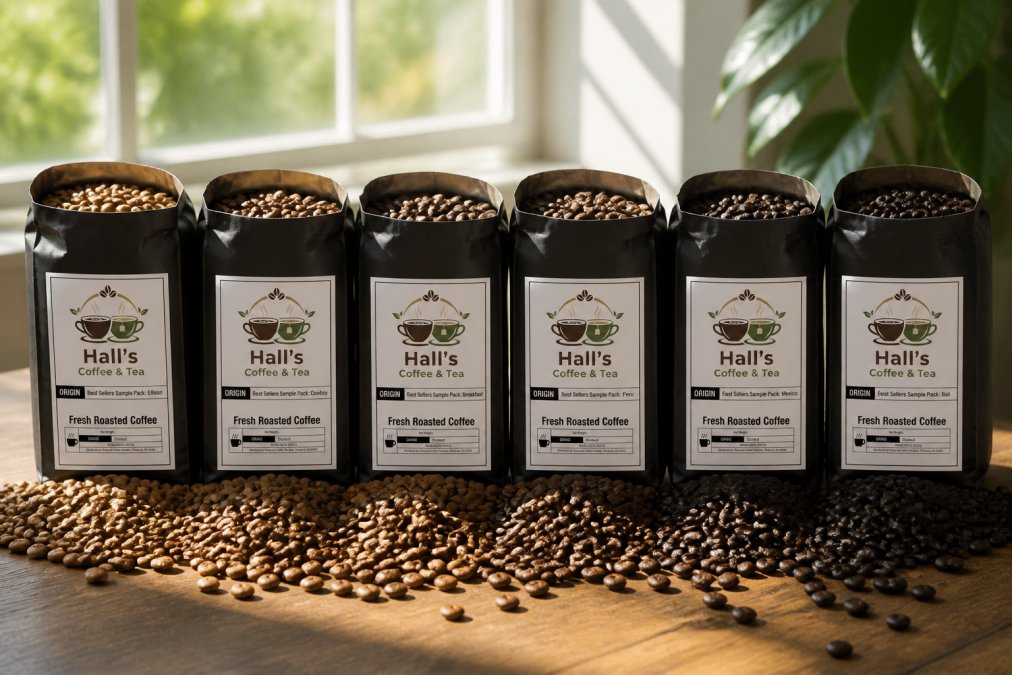
The real value is understanding how roast level changes extraction demands. The dark roasts need less water contact time; the medium roasts reward a slightly longer bloom. If you're dialing in an espresso machine, brewing these sequentially teaches you how grind adjustment compensates for roast profile differences. The Breakfast Blend pulls easily on most machines, making it a good baseline. The 6Bean Blend demands tighter tolerance and rewards precision.
Each 2-ounce portion means you finish the bag while it's still in the peak flavor window (typically 5-14 days after roasting for espresso, 7-21 days for filter coffee). You're not wrestling with stale beans halfway through a 12-ounce bag.
If you find a bean you love, you're reordering individual bags at $18.99 each or committing to a subscription model. But for someone building their palate or testing whether a subscription is worth the commitment, this is the lowest-friction entry point.
Single Origin Favorites Sample Pack: For Curated Selection Explorers
Hall's Coffee & Tea's Single Origin Favorites Sample Pack ($25.00) varies geography, processing method, and flavor character instead of roast levels. Six origins in 2-ounce packs: Brazil Santos (medium, smooth with cocoa), Colombia (medium, dried orange and berry), Costa Rica (medium, sweet apple and honey), Ethiopia (medium-light, fruity with caramel), Honduras (medium-dark, caramel and spice), and Tanzania (medium-light, pear and floral).

Each origin has a distinct tasting profile tied to altitude, soil composition, varietal, and processing method. Brazil's volcanic loam and pulped-natural process produce that smooth, cocoa-forward cup. Ethiopia's natural process creates fruity, wine-like character. Tanzania's altitude and clay minerals shift the cup toward floral and tea-like qualities.
Understanding these differences changes how you approach your brew method. A natural-process Ethiopian tastes thin and sour if you under-extract; dial it in and you get berry complexity. A washed Colombia needs slightly hotter water to bring out chocolate notes.
For espresso, the medium roasts work well, but they behave differently. Brazil and Honduras pull shots with body and sweetness. Colombia and Costa Rica demand more precise timing. Ethiopia and Tanzania are trickier; they want a slightly longer shot and tighter grind to avoid sourness. This pack teaches you that "espresso profile" isn't one thing; it's a conversation between the bean's origin and your machine's pressure profile.
Best Coffee Beans for Espresso Machines: Blends Built for Extraction
Espresso demands different bean characteristics than filter coffee. The 9 bars of pressure and short contact time mean you need beans with sufficient body and sweetness to shine under extraction stress. Hall's Coffee & Tea's espresso-focused options include the 6 Bean Blend ($18.99, dark roast), African Espresso ($18.99, medium-dark blend of Kenya, Tanzania, and Ethiopia), and Blonde ($18.99, sweet blend from Central America and Africa).
The 6Bean Blend is the workhorse. Dark roast means the beans are already partially broken down by heat, making extraction easier and more forgiving. You can dial in faster, and small grind adjustments don't crater your shot. The blend creates a balanced cup with cocoa and caramel notes that work well in milk-based drinks and stand alone as espresso.
African Espresso takes a different angle: medium-dark roast from three African origins. Kenya and Tanzania bring brightness and acidity; Ethiopia adds body. The blend balances these characteristics so you get complexity without the sourness that single-origin Africans can produce under-extracted. This blend rewards slightly higher water temperature and a medium-fine grind.
Blonde is the wild card. Light-medium roast from Central America and Africa, designed for sweetness. If you prefer espresso without the heavy body of dark roasts, this delivers caramel and vanilla tones. It's less forgiving than the 6Bean, but the flavor reward is worth it if your machine's temperature stability is solid.
How to Store Coffee Beans for Freshness and Peak Flavor
How you store coffee beans after opening determines whether they taste bright and complex or flat and stale by day ten. The enemy is oxidation, moisture, and light exposure. Coffee beans contain oils and volatile compounds that degrade when exposed to oxygen.
The ideal storage container is airtight, opaque, and kept in a cool, dry place. Glass jars with rubber seals work. Vacuum-sealed bags with a one-way valve work better because they let CO2 escape while preventing oxygen from entering. Avoid paper bags, clear containers, and the freezer (condensation ruins the beans when you remove them).
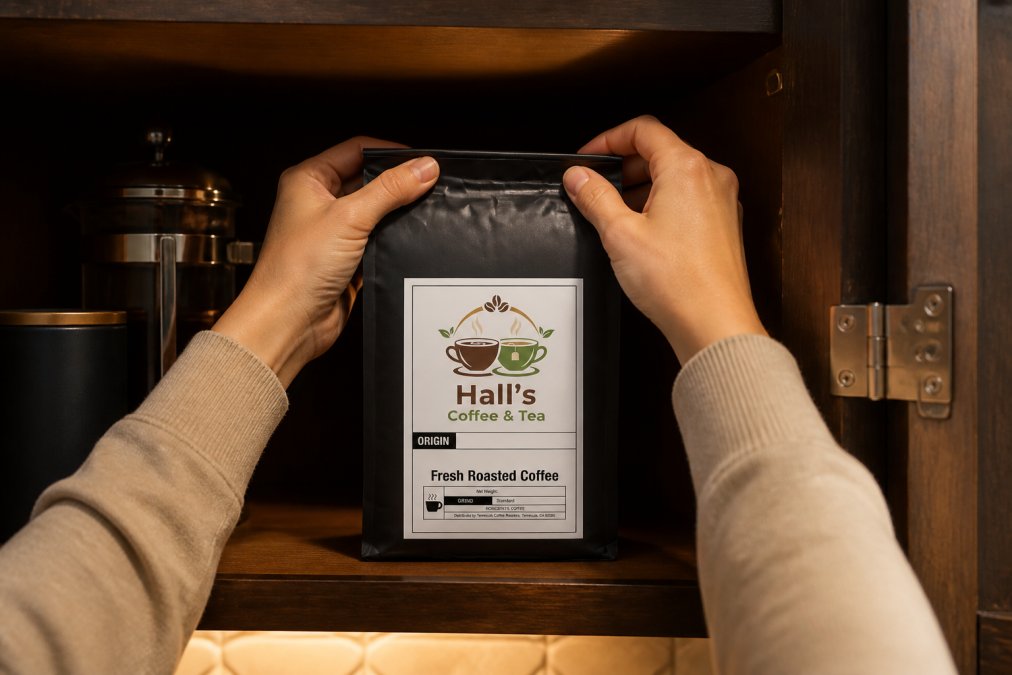
Room temperature (65-75°F) is acceptable (the FDA). Warmer kitchens accelerate staling. Refrigerators and freezers introduce moisture unless you're using an airtight container and letting beans reach room temperature before opening.
The roast date on your bag tells you when the beans reached peak flavor. For espresso, that's typically 5-14 days after roasting (peer-reviewed research). For filter coffee, 7-21 days (peer-reviewed research). Before the roast date, beans are still degassing and won't extract evenly. After the peak window, they're staling.
Whole beans stay fresher longer than ground coffee. Grind immediately before brewing. If you're batch-brewing or pulling multiple shots, grind for that session only.
Buy smaller quantities more frequently. A half-pound every two weeks stays fresher than a full pound you're nursing for a month. Hall's Coffee & Tea's sample packs align with this strategy.
Roast Date vs Best by Date: What Actually Matters for Your Brew
The roast date tells you when the beans were roasted. The best-by date is a shelf-life estimate, usually 6-12 months from roasting, and is mostly marketing and liability protection.
The roast date is what matters. A bean roasted three weeks ago is measurably different from one roasted three days ago. The flavor compounds haven't oxidized yet. The residual CO2 is mostly released. The oils haven't turned rancid. If you're buying online, the roast date tells you whether you're getting fresh beans or warehouse inventory.
Best-by dates are conservative. Coffee doesn't go bad at the marked date; it just starts to fade. For casual drinkers, that's fine. For home baristas dialing in espresso or exploring single-origin flavor notes, it matters.
Here's the practical framework: if the roast date is within 7 days, you're in the ideal window for espresso. If it's 7-21 days old, you're in the sweet spot for filter coffee. If it's older than 30 days, the beans are past their peak, though still drinkable. If the roast date isn't printed on the bag, that's a red flag.
When evaluating subscriptions, ask for roast date transparency. Reputable roasters print it on every bag.
Cost Per Cup and Subscription Fatigue: Making the Numbers Work
Subscription fatigue is the hidden cost nobody talks about. You sign up excited about the ritual and freshness guarantee. Three months in, you have unopened bags piling up, you forgot to skip last month's shipment, and the commitment that felt premium now feels like an obligation.
Hall's Coffee & Tea's single-origin and blend bags are $18.99. A 12-ounce bag yields roughly 15-18 cups depending on your brew ratio. That's $1.05-$1.27 per cup for premium, freshly roasted coffee. Compared to $3-5 per cup at a cafe, it's a win. Compared to $0.50 for mass-market grocery beans, it's an investment.
But subscription fatigue changes the equation. If you're paying for coffee you're not drinking because you couldn't pause in time, the effective cost per cup climbs. If you're forced into a preset rotation and half the selections don't match your preferences, you're throwing away money.
The best subscriptions offer flexibility: pause without penalty, skip months, choose your own selections, adjust frequency. Hall's Coffee & Tea's sample pack model ($25.00 every two months, for example) lets you control the cadence. You're not locked into a recurring charge.
For home baristas, the real cost isn't the beans, it's the time invested in dialing in and learning flavor profiles. A subscription that forces you to work with beans you didn't choose or doesn't arrive fresh enough to reward that work is a bad deal at any price.
Finding the best coffee subscriptions for home baristas means prioritizing freshness, flexibility, and beans calibrated to your brew method. Hall's Coffee & Tea delivers on all three: roast-to-order freshness with transparent roast dates, sample packs that let you explore without subscription lock-in, and blends and single origins specifically selected for espresso machines and pour-over brewers. Start with the Best Sellers Sample Pack or Single Origin Favorites Sample Pack to find your preferences, then explore individual bags like the 6 Bean Blend for espresso or Ethiopia Natural for filter methods. Shop Coffee with Hall's Coffee & Tea and upgrade your daily ritual with beans that actually reward your technique.
Frequently Asked Questions
Q: What makes a coffee subscription actually worth it for home baristas?
A: A quality coffee subscription delivers freshly roasted beans on your schedule, eliminating the hunt for single-origin or specialty blends at retail prices. For home baristas, the real value is access to curated selections with documented tasting notes, roast dates, and grower information that elevate your brewing ritual. Sample packs like the Best Sellers or Single Origin Favorites let you dial in your preferences without committing to full bags of beans you might not use before they lose peak flavor.
Q: How do I choose the right coffee subscription based on my brew method?
A: Match your subscription to your equipment and extraction method. Espresso requires specific blends engineered for crema and body; the 6 Bean Blend and African Espresso work well for espresso machines. Pour-over and drip brewing benefit from single-origin beans with defined tasting notes like Ethiopia Natural or Guatemala. Cold brew needs coarse grounds and darker roasts; the Cold Brew Coffee blend is specifically formulated for this. Check subscription descriptions for grind size options and brew-method recommendations.
Q: How should I store coffee beans to keep them fresh between deliveries?
A: Store beans in an airtight container away from heat, light, and moisture. A sealed glass or ceramic canister in a cool, dark cabinet works best; avoid the refrigerator or freezer, which expose beans to moisture and temperature swings. Keep the roast date visible on your container so you can track freshness. Most beans peak within 2-4 weeks of roasting, so plan subscription frequency around your brewing volume. Whole beans stay fresher longer than ground coffee, so grind just before brewing.
Q: What's the difference between roast date and best-by date on coffee bags?
A: Roast date tells you exactly when the beans were roasted and is the metric that matters most for flavor. Best-by dates are generic industry estimates, often 6-12 months out, and don't reflect peak freshness. Coffee is best consumed within 2-4 weeks of roasting, when the beans have fully degassed and flavor is most vibrant. A subscription with clearly printed roast dates ensures you know how fresh your beans are and can time your orders to avoid stale stock.
This article was written using GrandRanker
